
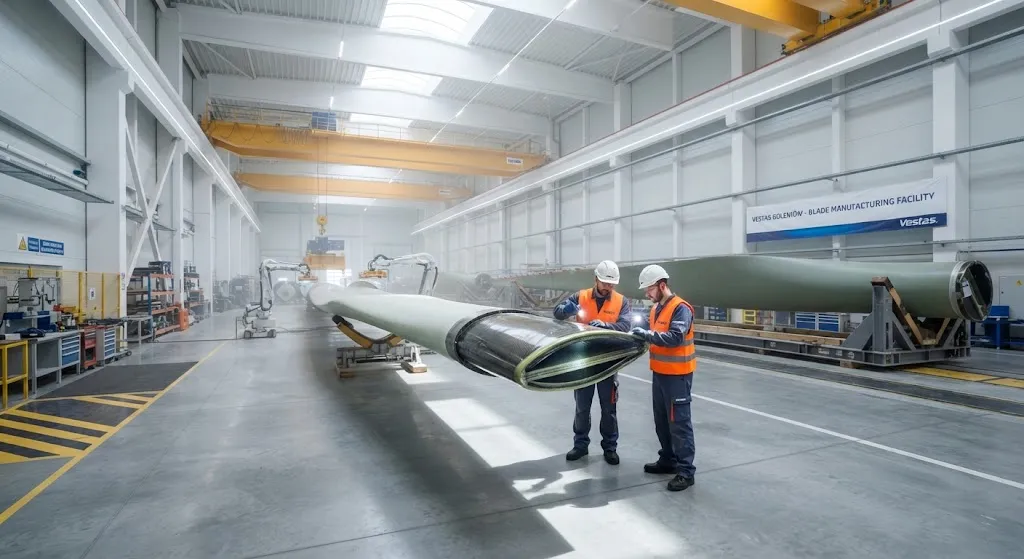
Poland has transformed from a regional assembly point into Central Europe's principal carbon fiber consumer. Two structural trends drive the shift. The first is defense: Poland's military budget reached approximately 4.7 percent of GDP in 2025, the highest share in NATO, and the governm
Introduction
Poland has transformed from a regional assembly point into Central Europe's principal carbon fiber consumer. Two structural trends drive the shift. The first is defense: Poland's military budget reached approximately 4.7 percent of GDP in 2025, the highest share in NATO, and the government has signaled continued spending near the alliance's re-emerging 5 percent guideline through the end of the decade. The second is wind energy: Poland operates the largest onshore wind fleet in Central Europe, and its Baltic Sea offshore wind program targets more than 11 GW by 2040, with the Vestas Goleniów blade factory positioned as the region's production centerpiece.
For carbon fiber suppliers and composite manufacturers, the two sectors create overlapping demand for intermediate materials — defense vehicles and their armor systems, wind turbine blades, and the aerospace maintenance ecosystem that both sectors support. This article examines the market structure, key industrial players, and the procurement outlook for 2026.
Defense Spending at the NATO Ceiling
Poland's defense budget reached approximately 155 billion zloty (roughly 39 billion US dollars) in 2025, or 4.7 percent of GDP — the highest military expenditure share in NATO and nearly triple the 1.98 percent baseline of the older member states. The acquisition pipeline is the largest in European history in per-capita terms and includes:
- Armored vehicle platforms: The Borsuk infantry fighting vehicle, the Rosomak wheeled armored vehicle upgrade program, and the K2 main battle tank line all draw on domestically integrated armor and ballistic composite packages.
- Combat aircraft: Poland's F-35A order — the largest in European history at 32 aircraft — entered the training and maintenance activation phase in 2025, creating structural composite MRO demand in-country.
- Unmanned systems: The Polish armed forces expanded loitering munition and tactical UAV programs, most of which specify carbon fiber airframes for range and payload performance.
Defense planners in Warsaw emphasize sovereign capability: composite material supply chains are increasingly expected to be established within Poland and neighboring allies, a factor that favors local pre-impregnation, lamination and molding capacity over imported finished parts.
The Wind Blade Manufacturing Base
Wind energy is the second pillar of Polish carbon fiber demand. Poland has approximately 10 GW of installed onshore wind capacity and is executing one of Europe's largest offshore expansions: the Baltic Power project alone (1.2 GW, operated with Norwegian investment) entered its construction phase in 2025, and total Baltic Sea capacity targets reach 6 GW by 2030 and 11 GW by 2040.
The manufacturing center of gravity is the Goleniów plant in northwestern Poland, acquired by Vestas in 2025 from previous ownership. The facility, which employs more than 1,100 people and is adding up to 300 additional positions, manufactures turbine blades for the European market. Its strategic value is compounded by the plant's marine and road logistics position near the Szczecin port complex, which serves both Baltic offshore projects and export routes to Germany and Scandinavia.
| Market Indicator | 2026 Value | Implication for Composites |
|---|---|---|
| Defense spending share of GDP | 4.7% (NATO-high) | Armored platforms, drones, aerospace MRO demand |
| Onshore wind installed capacity | ~10 GW | Blade repair, retrofit and replacements |
| Offshore wind target 2030/2040 | 6 GW / 11 GW | Large blade demand, local manufacturing pull |
| Goleniów blade plant employment | 1,100+ (adding 300) | Regional carbon fiber and glass fiber demand hub |
| F-35A order size | 32 aircraft | Long-term composite MRO and parts pipeline |
Aerospace and the Supporting Industrial Base
Beyond defense platforms, Poland hosts an established aerospace manufacturing sector that anchors composite material consumption. PZL Świdnik (Leonardo Helicopters) produces helicopter airframes including composite rotor components; PZL Mielec (Lockheed Martin) serves as a final assembly and modification center; and the Łukasiewicz research network operates composite R&D programs in Poznań and Kraków. The defense investment wave flows directly into this base: helicopter modernization programs and unmanned system contracts keep the domestic molding and machining capacities occupied beyond their civilian workloads.
The industrial geography reinforces the defense-wind dual structure. Western Poland — Szczecin, Goleniów, Poznań — concentrates wind blade and marine composite activity; central and southeastern clusters around Łódź, Rzeszów and Mielec anchor aerospace and defense work. For suppliers, the practical consequence is two distinct logistics regions with different qualification requirements: marine-grade blade resins and structural adhesives in the west, aerospace-grade prepreg and autoclave capacity in the east.
Supply Dynamics and Sourcing Outlook for 2026
Poland has no domestic carbon fiber precursor or filament production, so all carbon fiber is imported. The sourcing environment in 2026 is shaped by three factors:
- European protection of advanced fibers: Defense applications increasingly require non-Chinese-sourced PAN-based fiber meeting ITAR or NATO-endorsed quality regimes, shifting procurement toward Japanese, French and German suppliers.
- Wind blade material diversification: Blade manufacturers are expanding large-tow sourcing to keep up with 100+ meter blade programs while managing cost, sustaining demand for both glass fiber spar caps and carbon fiber spar caps in the largest offshore blades.
- Inventory and lead-time discipline: After the 2021-2022 supply shock, Polish OEMs now hold 3-6 months of key reinforcement inventory and favor contracts with domestic distribution partners that can buffer lead times.
For exporters evaluating entry, the near-term window favors organizations offering qualification-ready aerospace-grade tow and fabric, European-documentable supply chains, and technical support in Polish or German language — capabilities that map directly onto the defense and wind procurement structures described above.
Frequently Asked Questions
Why is Poland's defense spending relevant to the carbon fiber market?
Defense procurement is carbon-fiber-intensive per zloty spent because armor systems, armored vehicle hulls, drones and rotorcraft use composite materials at high specification. At the current spending level of 4.7% of GDP, Polish defense programs create a sustained, specification-demanding market for aerospace-grade fiber, prepreg and molded components — even while civilian aerospace demand is flat.
What role does the Vestas Goleniów plant play in European wind blade manufacturing?
The Goleniów plant is one of the largest blade factories in Central Europe and, following Vestas' acquisition, is positioned as a production and service center for European onshore and offshore turbine programs. The plant's expansion by up to 300 jobs, its proximity to the Szczecin port for Baltic offshore logistics, and its role in servicing existing onshore fleets make it a stable regional anchor for blade-grade glass and carbon fiber demand.
Does Poland produce its own carbon fiber?
No. Poland has no domestic precursor or carbon fiber manufacturing capacity, so all carbon fiber is imported. The growing demand from defense and wind sectors is met through direct supplies from European, Japanese and other international fiber producers, with an increasing share of defense-related grades sourced under NATO-aligned supply regimes. This import dependence is itself a driver for distributors and processors establishing Polish operations.
Conclusion
Poland's carbon fiber market in 2026 is defined by the convergence of NATO-record defense spending and a Baltic-region wind energy buildout anchored by the Vestas Goleniów blade plant. With defense budgets at 4.7 percent of GDP, a 6 GW-to-11 GW offshore wind pipeline, and an established aerospace manufacturing base in the east, Poland is the highest-growth composite demand center in Central Europe. The country imports all of its carbon fiber, which keeps the supplier opportunity open — but only to organizations that match Poland's specification requirements and logistics geography.
Suppliers evaluating the Polish market can start with qualification-ready materials for both sectors. Explore our aerospace and wind-grade carbon fiber products, or contact our team to discuss European supply and technical documentation for your programs.
Part of topic
Related Articles
- Carbon Fibre Rods Near Me: Complete Guide
- Carbon Fiber Rods Near Me: Complete Guide
- Carbon Fiber Rod Manufacturer: Complete Guide
- Carbon Fiber Tube Price: Complete Guide
- Carbon Fiber Manufacturers in the World: Capacity, Technology, and Market Leaders
- Carbon Fiber Cloth Supplier Philippines: Sourcing Fabric for Marine, Automotive, and Construction
Interested in Our Products?
Contact our team for competitive pricing and technical specifications.
Get a QuoteRelated Products
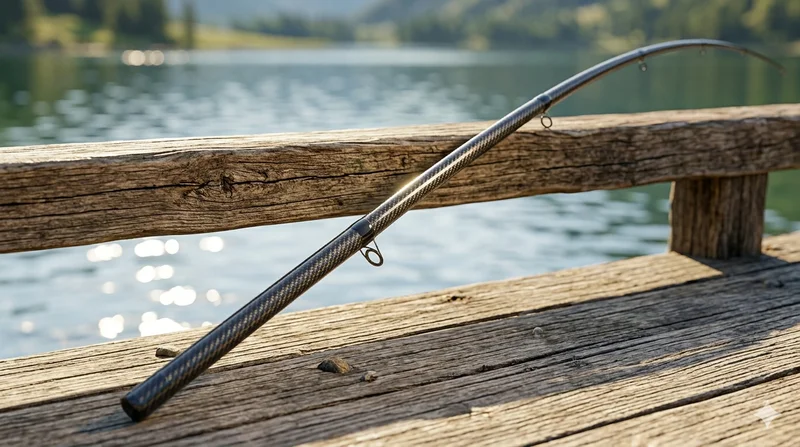
Carbon Fiber Fishing Rod Blank
High-quality carbon fiber fishing rod blank manufactured from multiple grades of Toray carbon fiber cloth. Available in a wide range of lengths, powers, and actions for freshwater and saltwater applications. Suitable for OEM rod building.

Carbon Fiber Plate — 3K Twill T700 1.5mm
Thin 1.5mm carbon fiber plate with 3K twill weave surface. Lightweight and stiff, commonly used for covers, panels, drone bodies, and applications requiring a premium aesthetic appearance.

Carbon Fiber Plate — 3K Twill T700 3.0mm
Medium-thickness 3.0mm carbon fiber plate offering significantly higher load capacity while maintaining attractive 3K twill finish. Suitable for structural brackets, reinforcement plates, and load-bearing panels.
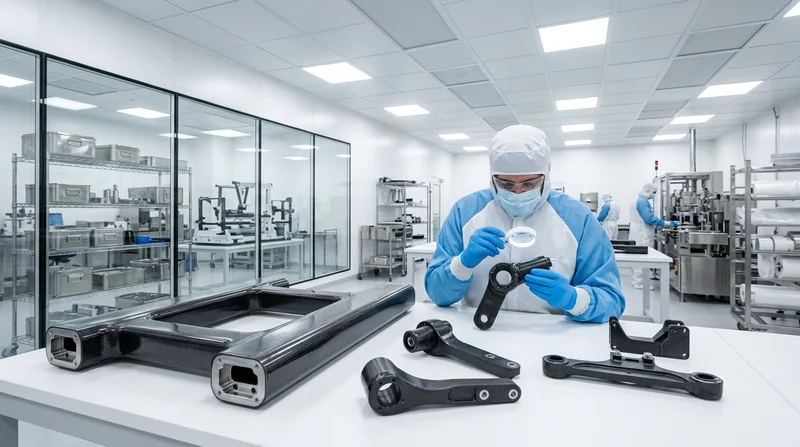
Custom Carbon Fiber Medical Device Components
Medical-grade carbon fiber components manufactured for imaging equipment, surgical instruments, and patient support systems. Carbon fiber's radiolucency (X-ray transparency) and high strength-to-weight ratio make it ideal for CT scanner beds, wheelchair frames, surgical robot arms, and MRI-compatible accessories. Biocompatible resin systems available.

Square Carbon Fiber Tube — 3K Twill T700
Square cross-section carbon fiber tube manufactured with 3K twill weave for torsional strength. Preferred for structural frames, trusses, and support columns where rectangular geometry offers design flexibility.