
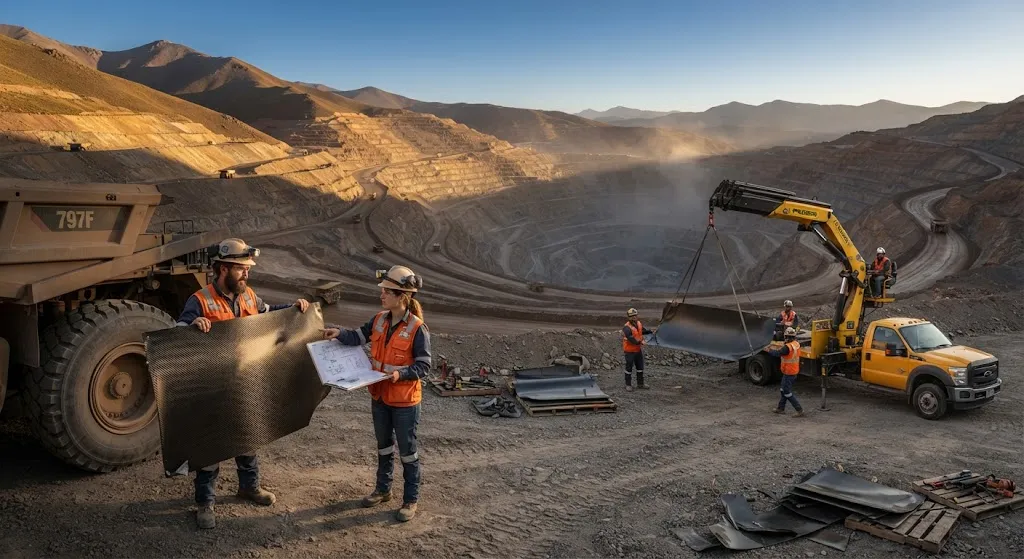
Peru is not the first country that comes to mind in a global review of carbon fiber demand, but its market profile is becoming increasingly interesting for composite suppliers. The country is the world's second largest producer of copper, it operates some of the highest-altitude mines o
Introduction
Peru is not the first country that comes to mind in a global review of carbon fiber demand, but its market profile is becoming increasingly interesting for composite suppliers. The country is the world's second largest producer of copper, it operates some of the highest-altitude mines on the planet, and it is modernizing agriculture along a narrow coastal belt where irrigation makes high-value export crops possible. Each of these sectors has discovered that carbon fiber components, while more expensive per kilogram than steel or aluminum, pay for themselves in remote and demanding operating conditions where weight, corrosion resistance and durability carry a premium.
This article examines the Peruvian carbon fiber market in three pillars: the mining expansion that concentrates demand in the central and southern Andes, the agricultural drone segment that is growing along the coast and in the highland valleys, and the infrastructure projects — including the new deep-water port of Chancay and seismic retrofitting — that use carbon fiber for structural strengthening. Together they define a niche but growing demand base for lightweight composite materials in the Andean region.
Mining Expansion: The Core of Peruvian Carbon Fiber Demand
Mining is the backbone of the Peruvian economy, contributing roughly ten percent of GDP and more than half of export revenues. Copper output has been climbing past the three-million-tonne level annually, supported by major operations such as Antamina, Las Bambas, Cerro Verde, Toromocho and the newer Quellaveco mine. Expansion projects at Toromocho and the development of new open-pit operations are extending a decade-long growth cycle, and each expansion raises the demand for equipment that must survive abrasive ore, dust and extreme altitude.
Carbon fiber enters this environment through wear-resistant and lightweight components: liners and chutes for ore handling, inspection platforms on concentrator tanks, protective covers for instrumentation, and structural parts for the haul trucks and drills that operate at elevations above four thousand meters. At such altitudes, every kilogram of unsprung weight on a machine costs fuel and reduces payload, so mining operators increasingly specify carbon fiber and fiberglass hybrids where the supplier can demonstrate fatigue life and impact resistance comparable to steel at a fraction of the weight.
Mining logistics intensify the case for lightweight materials. Many Peruvian operations sit thousands of meters above sea level and are reached by unpaved mountain roads, where every truck trip carries a hard fuel and maintenance cost. Replacing a steel liner or cover with a carbon fiber part that weighs a fraction as much reduces the number of trips for replacement parts, lowers fuel burn on steep climbs, and extends the practical reach of maintenance crews. For equipment that must be airlifted by helicopter to the highest-altitude installations, weight is literally bought by the kilogram, which makes composite parts economical despite unit prices far above steel.
Agricultural Drones: A Fast-Growing Demand Segment
Peruvian agriculture has transformed along the coast, where large irrigation schemes such as Chavimochic and Olmos have turned arid desert into fields of asparagus, avocado, blueberries and table grapes for export. These high-value crops have made Peruvian growers early adopters of precision agriculture, and agricultural spray drones are the fastest-growing equipment category on the coast and in the highland valleys of Ayacucho and Cajamarca.
Spray drones benefit directly from carbon fiber's stiffness-to-weight ratio. A composite drone frame and boom carry more payload, hover longer on a single charge and resist the corrosive effect of agrochemicals that quickly attack aluminum structures. Export-oriented growers use drones for spot spraying, disease monitoring and variable-rate treatment, and the maintenance economics of carbon fiber components — no corrosion, predictable fatigue life — fit the seasonal cash-flow rhythm of export farming. Carbon fiber demand from this segment is small in tonnage but high in value, and it is growing faster than any other Peruvian application.
Beyond spraying, drone services for surveying and inspection are expanding across the Peruvian market. Mining operators use mapping drones to generate topographic models of pit faces and stockpiles, while growers use multispectral sensors to assess crop health and irrigation efficiency. These platforms are lighter and longer-endurance than spray drones, and they share the same composite construction logic: carbon fiber frames optimize payload for sensors and batteries, tolerate dust and humidity, and remain serviceable at the remote highland and coastal sites where the work happens.
Ports, Roads and Seismic Strengthening
The third pillar is infrastructure. The deep-water port of Chancay, built with Chinese investment around thirty kilometers north of Lima, began operations in late 2024 and is designed to become a Pacific hub serving Andean trade. Port machinery, cranes and container-handling equipment expose composite materials to salt air, and carbon fiber components appear in covers, walkways and structural reinforcements where corrosion resistance and low maintenance outweigh initial cost.
Peru also sits on an active seismic zone where the Nazca plate subducts beneath the South American continent. Structural engineers use carbon fiber reinforced polymer wraps and strips to retrofit bridges, hospital columns and wharf structures against earthquake loads without adding significant mass, which would increase seismic forces. CFRP sheets bonded to concrete columns raise ductility and shear capacity, and the same material system is used for strengthening deteriorating infrastructure across Lima and the Andean highway network.
Demand Structure at a Glance
The table below summarizes the main segments of Peruvian carbon fiber demand and the drivers shaping each one.
| Segment | Primary Applications | Growth Driver | Near-Term Outlook |
|---|---|---|---|
| Mining | Wear liners, inspection platforms, vehicle components | Copper expansion at high altitude | Steady, value-driven demand |
| Agriculture | Spray drone frames and booms | High-value export crops and precision farming | Fastest growing segment |
| Infrastructure | CFRP seismic retrofit wraps and strips | Earthquake resilience and port modernization | Project-driven growth |
Key Factors Shaping Demand
- High-altitude mining: Equipment operating above 4,000 meters rewards weight reduction in fuel, payload and transport cost.
- Export agriculture: Coastal irrigation projects support high-value crops whose growers adopt spray drones early.
- Corrosion environments: Salt air at Chancay and agrochemical exposure both favor composites over metals.
- Seismic design: CFRP strengthening adds capacity without adding seismic mass, a decisive advantage in Peru.
- Logistics costs: Landlocked Andean operations make lightweight parts economical despite higher material prices.
Frequently Asked Questions
Why would a mining company use carbon fiber when steel is cheaper?
Mining equipment that operates at high altitude carries a fuel and payload penalty for every kilogram of weight. Carbon fiber components reduce machine mass, resist corrosion and offer predictable fatigue life in abrasive and dusty environments. When the total cost of ownership — fuel, transport to remote sites, replacement frequency — is considered, composite parts frequently win over cheaper per-kilogram metals.
How are carbon fiber drones used in Peruvian agriculture?
Peruvian growers use composite spray drones for spot spraying, disease monitoring and variable-rate treatment of high-value export crops such as avocado, blueberries and asparagus. Carbon fiber frames and booms are light enough to carry more payload and hover longer on one charge, and they resist the corrosive effect of agrochemicals. The fastest growth is along the coastal irrigation belt and in highland valleys with steep terrain where ground equipment is impractical.
Why is CFRP used for seismic strengthening in Peru?
Peru sits on an active seismic zone, and retrofitting a column or bridge pier with steel jackets adds mass that increases the seismic force the structure must resist. Carbon fiber reinforced polymer wraps add strength and ductility with almost no added mass, which is why engineers use CFRP sheets and strips to strengthen bridges, hospital columns and wharf structures across Peruvian cities and along the Andean highway network.
Conclusion
Peru's carbon fiber market is small in volume but unusually diversified. Mining expansion in the Andes rewards light, corrosion-resistant equipment; the coastal agricultural boom is pulling composite drones into daily use; and seismic resilience requirements are embedding CFRP into infrastructure practice. Suppliers who serve these niches — with durable industrial components, drone-grade materials and reliable retrofit reinforcement — will find a growing and relatively stable demand base in the Andean region.
YongXian supplies carbon fiber fabrics, prepregs and reinforcement materials for industrial, agricultural and construction applications. Explore our carbon fiber product range or contact our engineering team to discuss materials for your Peruvian or Latin American program.
Part of topic
Related Articles
Interested in Our Products?
Contact our team for competitive pricing and technical specifications.
Get a QuoteRelated Products
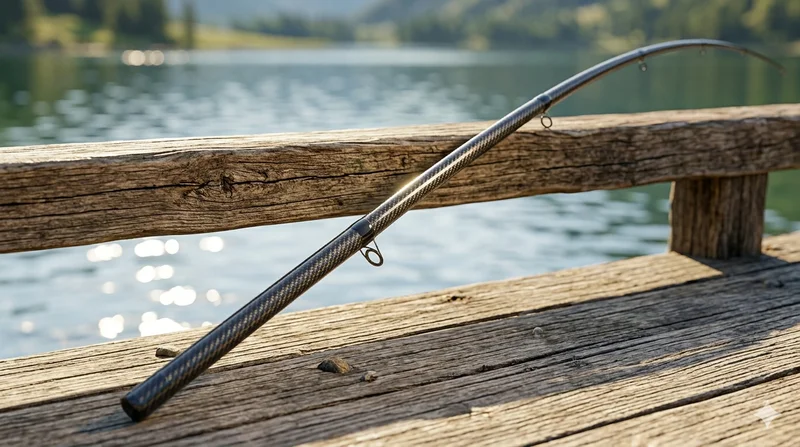
Carbon Fiber Fishing Rod Blank
High-quality carbon fiber fishing rod blank manufactured from multiple grades of Toray carbon fiber cloth. Available in a wide range of lengths, powers, and actions for freshwater and saltwater applications. Suitable for OEM rod building.

Carbon Fiber Plate — 3K Twill T700 3.0mm
Medium-thickness 3.0mm carbon fiber plate offering significantly higher load capacity while maintaining attractive 3K twill finish. Suitable for structural brackets, reinforcement plates, and load-bearing panels.
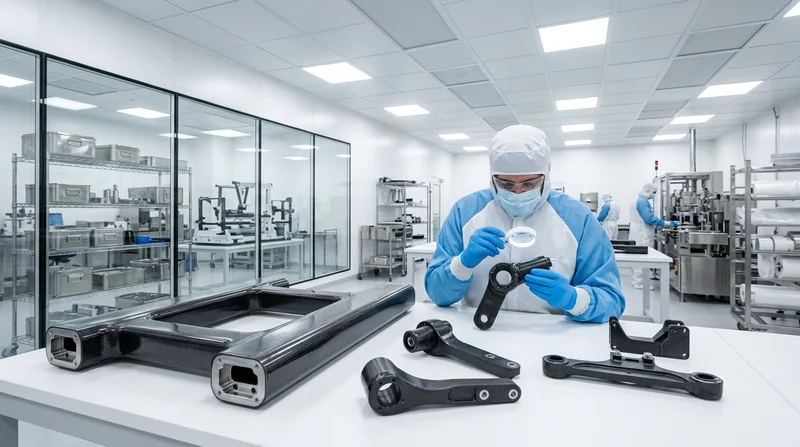
Custom Carbon Fiber Medical Device Components
Medical-grade carbon fiber components manufactured for imaging equipment, surgical instruments, and patient support systems. Carbon fiber's radiolucency (X-ray transparency) and high strength-to-weight ratio make it ideal for CT scanner beds, wheelchair frames, surgical robot arms, and MRI-compatible accessories. Biocompatible resin systems available.

Carbon Fiber Plate — 3K Twill T700 1.5mm
Thin 1.5mm carbon fiber plate with 3K twill weave surface. Lightweight and stiff, commonly used for covers, panels, drone bodies, and applications requiring a premium aesthetic appearance.

Square Carbon Fiber Tube — 3K Twill T700
Square cross-section carbon fiber tube manufactured with 3K twill weave for torsional strength. Preferred for structural frames, trusses, and support columns where rectangular geometry offers design flexibility.