
The Netherlands carbon fiber market is entering 2026 as one of the fastest-growing composite demand centers in Western Europe, powered by the country's dual energy transition bets on offshore wind and green hydrogen. With the North Sea becoming Europe's largest offshore wind basin and t
Introduction
The Netherlands carbon fiber market is entering 2026 as one of the fastest-growing composite demand centers in Western Europe, powered by the country's dual energy transition bets on offshore wind and green hydrogen. With the North Sea becoming Europe's largest offshore wind basin and the Port of Rotterdam transforming into a hydrogen import gateway, the Dutch economy now consumes carbon fiber across wind turbine blades, hydrogen storage systems, marine applications, and a resilient aerospace engineering sector that traces its roots to the Fokker aircraft tradition.
For composite material suppliers and B2B buyers, the Netherlands represents a concentrated opportunity: a small, highly industrialized market with advanced manufacturing capabilities, strong export infrastructure, and government-backed energy programs that run to 2030 and beyond. This article outlines the key demand drivers, quantifies the scale of planned projects, and explains where carbon fiber fits into the Dutch industrial landscape in 2026.
Offshore Wind: The Dominant Carbon Fiber Demand Driver
The North Sea offshore wind program is the single largest driver of carbon fiber demand in the Netherlands. The government's roadmap targets roughly 21 GW of installed offshore wind capacity by 2032, and the latest tender rounds under the new Offshore Wind Energy Act have shifted from fixed subsidies to zero-subsidy and CfD (contract for difference) models that push turbine makers toward lighter, higher-efficiency rotor designs.
| Wind Farm Zone | Status | Capacity | Carbon Fiber Relevance |
|---|---|---|---|
| Hollandse Kust West | Under construction | 1.4 GW | Next-generation Haliade-X and SG 14-236 DD blades with carbon spar caps |
| IJmuiden Ver Alpha | Tendered 2025-2026 | 2 GW | 165+ meter blades, carbon fiber leading-edge and spar applications |
| IJmuiden Ver Beta/Gamma | Planned | 4 GW | Largest planned zone, requires 15 MW+ turbines |
| Nederwiek 1-3 | Upcoming tenders | 6 GW | Floating-ready foundations, longer blades |
| Doordewind 1-2 | Late-decade pipeline | 4 GW | Likely 20 MW class turbines |
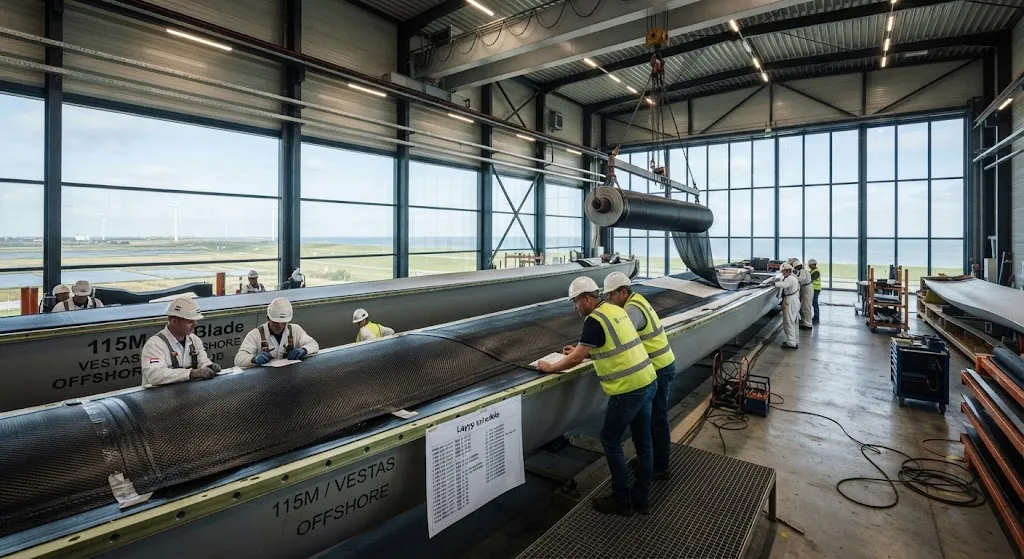
As rotor diameters move past 236 meters and turbine ratings exceed 15 MW, blade manufacturers increasingly specify carbon fiber in the spar caps and structural webs to control mass growth. A typical 115-meter blade using carbon spar caps is roughly 20-25% lighter than an all-glass equivalent, which directly reduces loads on the drivetrain, tower, and foundation. Each gigawatt of new offshore wind capacity translates to an estimated 1,500-2,000 tonnes of carbon fiber consumption across blades, nacelle covers, and internal structural components.
Hydrogen Import Hub: Emerging Demand for Composite Storage
The Netherlands is building the infrastructure to import, store, and distribute green hydrogen at industrial scale, and this creates a distinct tier of carbon fiber demand in pressure vessel and transport applications. Rotterdam aims to receive 4.6 million tonnes of hydrogen and its derivatives per year by 2030, supplemented by planned import terminals at Eemshaven in the north.
- Type IV and Type V storage vessels: Carbon fiber fully wound composite vessels for truck transport and stationary storage are a direct fit, with 350-bar and 700-bar tank classes specifying T700-grade fiber.
- Ammonia cracking and export terminals: Converted ammonia import and cracking capacity requires composite piping, fittings, and cryogenic insulation structures.
- Bunkering infrastructure: The Netherlands is Europe's largest bunkering hub; hydrogen and methanol bunkering ships and barges need lightweight composite deck structures and tanks.
- Electrolyzer balance of plant: Large PEM and alkaline electrolysis plants being built in Rotterdam harbor use composite frames, gas separators, and protective enclosures.
The hydrogen angle matters commercially because it broadens Dutch carbon fiber demand beyond wind: while wind is cyclical and project-based, hydrogen storage consumption is recurring as fleets of tube trailers, ISO containers, and stationary tanks are manufactured in volume through the decade.
For composite fiber suppliers, the most concrete early opportunity in this segment is pressure vessel manufacturing. Tube trailer and ISO container producers serving the Dutch market specify T700-grade carbon fiber with tight tow-weight vouchers and documented tensile properties, and several European vessel makers are expanding capacity specifically to serve Rotterdam-linked hydrogen logistics contracts. This recurring demand runs in parallel with wind blade programs, giving a diversified revenue base that does not depend on turbine installation timing. Vessel qualification cycles also reward suppliers who hold stable process data across batches, since tank certification files reference fiber lot records year after year, making consistency a competitive advantage as the Dutch hydrogen market scales through the decade.
Aviation and Aerospace Engineering: A High-Value Niche
Although the Netherlands no longer produces airliners at scale, it retains one of Europe's most sophisticated aerospace engineering ecosystems. NLR (Netherlands Aerospace Centre) and the regional innovation cluster support composites R&D in structural health monitoring, thermoplastic composites, and out-of-autoclave processing. Aircraft maintenance, repair, and overhaul (MRO) companies at Schiphol and aerospace component suppliers consume carbon fiber prepreg, honeycomb, and repair materials in steady volumes, with a growing shift toward Airbus A350-class widebody repairs that justify premium-grade material specifications.
The Dutch aerospace sector also feeds the space economy. The Netherlands is home to significant European Space Agency (ESA) program participation, with Dutch companies supplying composite structural parts for satellite platforms and launch vehicle stages. This segment is smaller in tonnage than wind but commands much higher value per kilogram and rewards suppliers who can meet strict traceability and qualification documentation requirements.
Marine and Maritime Applications
The Dutch maritime cluster — including the world-famous superyacht builders in Friesland and Zeeland, naval shipyards, and a large inland shipping fleet — continues to adopt carbon fiber for weight-critical structures. Superyacht masts, hulls, and interior structural components use aerospace-grade prepreg, while the inland fleet's push toward electrification and lightweighting generates demand in cargo and passenger vessel retrofits. Naval programs at Damen and other yards specify carbon fiber for non-magnetic superstructures, masts, and small combatant hull sections where weight, stealth, and corrosion resistance matter.
Supply Chain Dynamics and What Suppliers Should Know
Dutch manufacturers do not produce carbon fiber domestically; all raw material is imported, which makes the Netherlands a demand-side market open to global suppliers. Practical considerations for entering the Dutch composite supply chain in 2026:
- Logistics advantage: Rotterdam and Amsterdam provide direct deep-sea container connections, making door-to-door delivery of carbon fiber rolls, prepreg (with cold chain), and towpreg straightforward and cost-competitive.
- Sustainability reporting: Dutch industrial customers increasingly require product carbon footprint data and ISCC-certified or recycled content options, reflecting EU-level environmental disclosure rules.
- Technical service expectation: Dutch engineers value direct technical support; suppliers offering winding trials, data sheets, and application engineering assistance convert inquiries to orders more effectively than price-only offers.
- Standards alignment: Buyers reference European material standards and expect EN/ASTM-compliant testing documentation to accompany shipments.
Frequently Asked Questions
How large is the Dutch carbon fiber market compared to other European countries?
In tonnage terms the Netherlands is a mid-sized European consumer — smaller than Germany, France, or Italy — but it concentrates demand in high-growth segments. Offshore wind and hydrogen infrastructure give the Dutch market a growth profile comparable to Denmark and Norway, and its per-capita consumption of carbon fiber in high-value applications is among the highest in Europe thanks to the aerospace, maritime, and renewable energy sectors operating simultaneously.
What carbon fiber grades does the Dutch market typically specify?
For offshore wind blades, T700-class intermediate-modulus fiber (230-240 GPa modulus) dominates spar cap applications, and newer blade designs are evaluating T800-class fiber for the largest rotors. Pressure vessel and hydrogen storage applications predominantly specify aerospace-standard T700 with 4,900 MPa tensile strength. The aerospace and marine sectors mix standard modulus, intermediate modulus, and high modulus (T800 and above) grades depending on stiffness requirements, typically in 24K and 48K tow formats for wind, and 12K for aerospace prepreg.
How does carbon fiber demand from hydrogen storage compare with offshore wind?
On a project basis wind dominates: individual tenders consume thousands of tonnes across blade programs. Hydrogen storage is smaller but more recurrent — a fleet of tube trailers and stationary tanks creates steady monthly filament winding consumption that continues independently of individual installation projects. Suppliers serving both segments benefit from diversifying between the capital-intensive wind cycle and the steadier recurring storage demand.
Conclusion
The Netherlands carbon fiber market in 2026 is defined by three reinforcing trends: the North Sea wind build-out toward 21 GW, the Port of Rotterdam's transformation into Europe's hydrogen import hub, and a sophisticated aerospace and maritime engineering base that consumes premium material at high margins. For material suppliers, the Dutch market rewards logistics capability, sustainability documentation, and application engineering support. The projects are concrete, the import dependence is structural, and the growth is backed by binding government targets rather than speculative forecasts.
YongXian supplies carbon fiber tow, fabrics, and prepreg suitable for offshore wind blade structures, Type IV pressure vessels, and aerospace and marine applications. Explore our carbon fiber product range, or contact our export team to discuss specifications, documentation, and delivery to Dutch ports.
Part of topic
Related Articles
Interested in Our Products?
Contact our team for competitive pricing and technical specifications.
Get a QuoteRelated Products
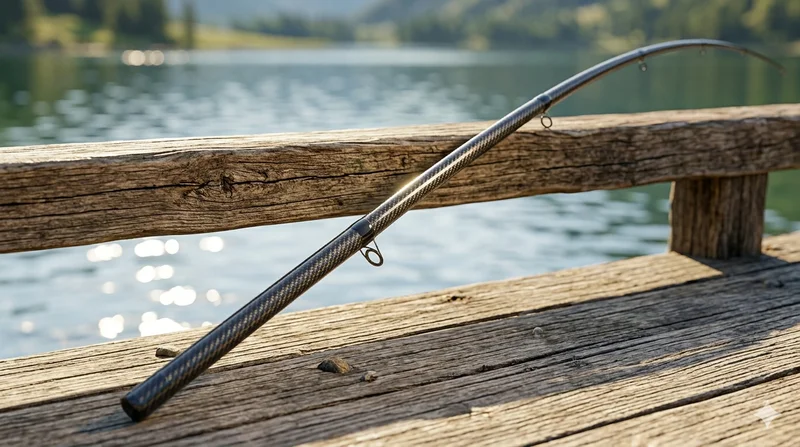
Carbon Fiber Fishing Rod Blank
High-quality carbon fiber fishing rod blank manufactured from multiple grades of Toray carbon fiber cloth. Available in a wide range of lengths, powers, and actions for freshwater and saltwater applications. Suitable for OEM rod building.

Carbon Fiber Plate — 3K Twill T700 3.0mm
Medium-thickness 3.0mm carbon fiber plate offering significantly higher load capacity while maintaining attractive 3K twill finish. Suitable for structural brackets, reinforcement plates, and load-bearing panels.
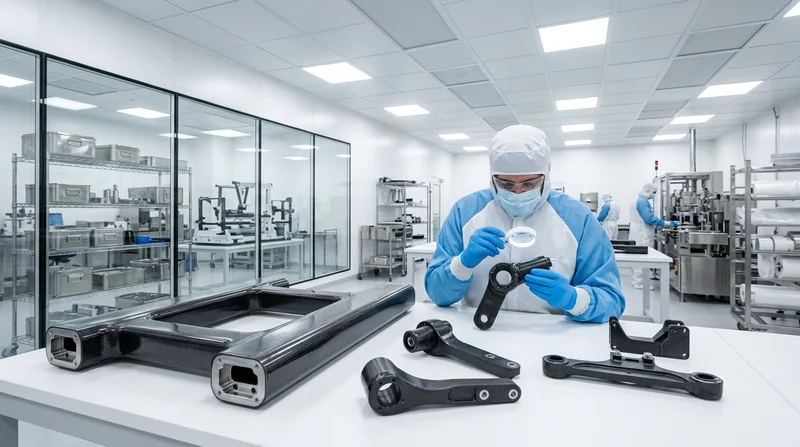
Custom Carbon Fiber Medical Device Components
Medical-grade carbon fiber components manufactured for imaging equipment, surgical instruments, and patient support systems. Carbon fiber's radiolucency (X-ray transparency) and high strength-to-weight ratio make it ideal for CT scanner beds, wheelchair frames, surgical robot arms, and MRI-compatible accessories. Biocompatible resin systems available.

Carbon Fiber Plate — 3K Twill T700 1.5mm
Thin 1.5mm carbon fiber plate with 3K twill weave surface. Lightweight and stiff, commonly used for covers, panels, drone bodies, and applications requiring a premium aesthetic appearance.

Square Carbon Fiber Tube — 3K Twill T700
Square cross-section carbon fiber tube manufactured with 3K twill weave for torsional strength. Preferred for structural frames, trusses, and support columns where rectangular geometry offers design flexibility.