Germany is Europe's largest market for carbon fiber and carbon fiber reinforced composites, and the structure of that demand is changing faster than in almost any other region. The country produces more than four million passenger cars per year, it hosts the continent's most important w
Introduction
Germany is Europe's largest market for carbon fiber and carbon fiber reinforced composites, and the structure of that demand is changing faster than in almost any other region. The country produces more than four million passenger cars per year, it hosts the continent's most important wind power supply chain, and it operates a regulatory environment — led by the 95 g/km fleet CO2 target — that turns lightweight materials into an economic necessity rather than a performance luxury. For composite suppliers, the German market is defined by three forces: mass-produced automotive parts that must be cost competitive at high volumes, wind turbine blades that push ever longer and stiffer, and an industrial base that consumes carbon fiber across aerospace, marine and machinery applications.
This article maps the German carbon fiber market for 2026. It examines the automotive composites segment where SGL Carbon's Meitingen plant has pioneered thermoplastic processing for series vehicles, the CO2 regulation that drives engineers toward carbon fiber, the wind energy segment anchored by Siemens Gamesa blade manufacturing and the repowering of aging onshore turbines, and the aerospace and industrial applications that round out demand.
Automotive Composites: The Core of German Carbon Fiber Demand
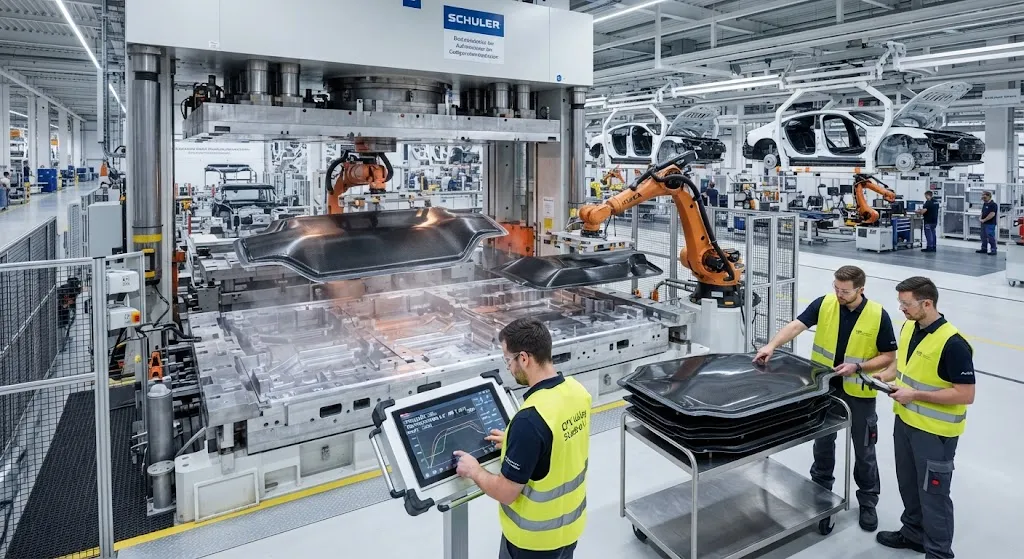
Automotive is the single largest consumer of carbon fiber in Germany, a position it owes to the long relationship between German vehicle manufacturers and SGL Carbon. SGL operates one of Europe's largest carbon fiber plants at Meitingen in Bavaria, and its production philosophy has shifted decisively toward thermoplastic composites — carbon fiber reinforced thermoplastics that can be formed in cycle times measured in seconds rather than the hours required by autoclave-cured thermosets. This makes them compatible with the economics of vehicle series production.
Thermoplastic carbon fiber is used in structural and semi-structural parts: floor panels, seat structures, battery enclosures for electric vehicles, roof modules and crash-relevant body reinforcements. Unlike the visible carbon fiber trim of the 2010s, today's German automotive programs specify carbon fiber where it earns its cost — high stiffness-to-weight ratio in components that directly reduce fuel consumption or extend electric range. Weight saving cascades through the vehicle architecture: a structural part weighing five kilograms can remove ten to fifteen kilograms of indirectly loaded metal around it, and every ten percent reduction in vehicle weight is estimated to improve electric driving range by roughly three to five percent.
CO2 Regulation and the 95 g/km Fleet Target
The regulatory backbone of German automotive lightweighting is the European Union fleet CO2 legislation. Since 2021, the average new passenger car registered in the EU must emit no more than 95 grams of CO2 per kilometer in the official test cycle. Manufacturers that exceed the target pay substantial penalties per gram per vehicle, so every technology that reduces emissions — including weight reduction — carries a direct, quantified value. Carbon fiber fits this equation because it is one of the few material families that combine very high strength with a density roughly 40 percent below aluminum and about 80 percent below steel.
The 95 g/km regime has pushed German original equipment manufacturers toward larger shares of electric and hybrid vehicles and toward structural lightweighting of the remaining combustion and battery-electric platforms. Carbon fiber appears where the weight budget is tightest: high-performance battery enclosures, body-in-white reinforcements, and the structural packages of premium and sports models. The same logic extends to corporate fleet calculations, where reduced vehicle mass lowers homologated emissions and widens the compliance margin for manufacturers aiming below the regulatory ceiling.
Wind Energy: Siemens Gamesa Blades and Onshore Repowering
Wind energy is the second pillar of German carbon fiber demand. Siemens Gamesa Renewable Energy — the turbine manufacturer that grew from Siemens Wind Power's German base — builds offshore and onshore rotor blades in which carbon fiber and carbon-glass hybrid spar caps carry the bending loads of increasingly long blades. Carbon fiber's high stiffness-to-weight ratio allows longer blades at acceptable mass, which is decisive because annual energy production scales strongly with blade length: extending a blade can raise energy capture by several percent without changing the rotor hub or tower rating.
Beyond new turbines, Germany's enormous installed base of aging onshore wind turbines is entering its repowering window. A large share of the roughly 30,000 onshore turbines operating in Germany is older than fifteen years, and repowering replaces several small legacy machines with fewer, larger, more efficient turbines — often with longer carbon-fiber-reinforced blades. Blade tip extensions are also retrofitted to existing rotors to extract additional energy from the same foundation and grid connection. Both retrofit and replacement pull carbon fiber demand from a domestic manufacturing base concentrated in northern Germany and along the Baltic coast.
Aerospace and Industrial Segments
The remaining German carbon fiber demand comes from aerospace and industrial applications. Airbus assembles large transport aircraft in Hamburg, and the A350 airframe — with its carbon fiber wing covers and fuselage panels — consumes a substantial share of aerospace-grade fiber used in Europe. German suppliers deliver preforms, prepregs and structural subassemblies into that supply chain. On the industrial side, carbon fiber is used in machine tool structures, rollers and handling equipment where stiffness and low thermal expansion improve precision, and in the marine sector for masts, hulls and structural reinforcements of racing and performance craft.
Demand Structure at a Glance
The table below summarizes the main segments of German carbon fiber demand and their near-term drivers.
| Segment | Primary Applications | Growth Driver | Near-Term Outlook |
|---|---|---|---|
| Automotive | Thermoplastic structural parts, battery enclosures, body reinforcements | 95 g/km CO2 target and electric range optimization | Moderate growth, cost-sensitive |
| Wind energy | Spar caps, blade tip extensions, hybrid rotor blades | Onshore repowering and longer blades | Steady demand, blade length race |
| Aerospace | Prepregs, preforms, structural subassemblies | A350 production rates and next-generation programs | Recovery-led, high-value fiber |
| Industrial | Machine tool structures, rollers, marine parts | Stiffness and precision requirements | Stable, application-specific |
Key Factors Shaping Demand
- Thermoplastic processing: Cycle times measured in seconds make carbon fiber viable for high-volume automotive production, anchored by SGL Carbon's Meitingen plant.
- Regulatory pressure: The 95 g/km fleet CO2 target assigns a measurable value to every kilogram of weight saved.
- Repowering wave: Tens of thousands of aging German onshore turbines create retrofit and replacement demand for carbon blades.
- Aerospace recovery: Rising production rates at Airbus in Hamburg rebuild demand for aerospace-grade fiber and prepreg.
- Cost discipline: German manufacturers increasingly specify recycled and intermediate-modulus fibers where performance allows, widening the usable demand base.
Frequently Asked Questions
Why is Germany the largest carbon fiber market in Europe?
Germany combines the strongest automotive manufacturing base on the continent with a leading wind power supply chain and a large aerospace sector around Airbus in Hamburg. The EU's 95 g/km fleet CO2 target creates regulatory pressure to lightweight vehicles, while aging onshore turbines and the trend toward longer blades sustain wind energy demand. Together these segments make Germany the single largest consumer of carbon fiber in Europe.
How does CO2 regulation drive carbon fiber use in cars?
The EU's 95 g/km fleet average CO2 target for new passenger cars imposes financial penalties per gram per vehicle on manufacturers that exceed the limit. Weight reduction lowers fuel consumption and, for electric vehicles, improves range per charge, directly improving homologated emissions. Carbon fiber's combination of high strength and low density makes it one of the most effective structural materials for the vehicle weight budget, particularly in battery enclosures and body reinforcements.
What role does Siemens Gamesa play in German carbon fiber demand?
Siemens Gamesa builds large offshore and onshore rotor blades in which carbon fiber and hybrid spar caps carry the bending loads of long blades. Because energy capture rises with blade length, the industry's push toward longer blades increases carbon fiber content per turbine. Germany's repowering wave — replacing thousands of aging onshore turbines with fewer, larger machines — and retrofitted blade tip extensions further pull carbon fiber demand through domestic blade manufacturing.
Conclusion
Germany's carbon fiber market in 2026 is shaped by three structural forces: a regulatory framework that prices every kilogram of vehicle weight, an automotive industry moving thermoplastic composites into series production at scale, and a wind energy base entering a multi-year repowering cycle. Suppliers who can serve cost-sensitive automotive customers with fast-processing thermoplastics, deliver reliable reinforcement solutions to blade manufacturers, and maintain the traceability and quality required by aerospace will find the German market among the most valuable in Europe.
YongXian supplies carbon fiber fabrics, prepregs and reinforcement materials for automotive, wind energy and aerospace applications. Explore our carbon fiber product range or contact our engineering team to discuss materials for your German or European program.
Part of topic
Related Articles
Interested in Our Products?
Contact our team for competitive pricing and technical specifications.
Get a QuoteRelated Products

Carbon Fiber Fishing Rod Blank
High-quality carbon fiber fishing rod blank manufactured from multiple grades of Toray carbon fiber cloth. Available in a wide range of lengths, powers, and actions for freshwater and saltwater applications. Suitable for OEM rod building.
Carbon Fiber Plate — 3K Twill T700 3.0mm
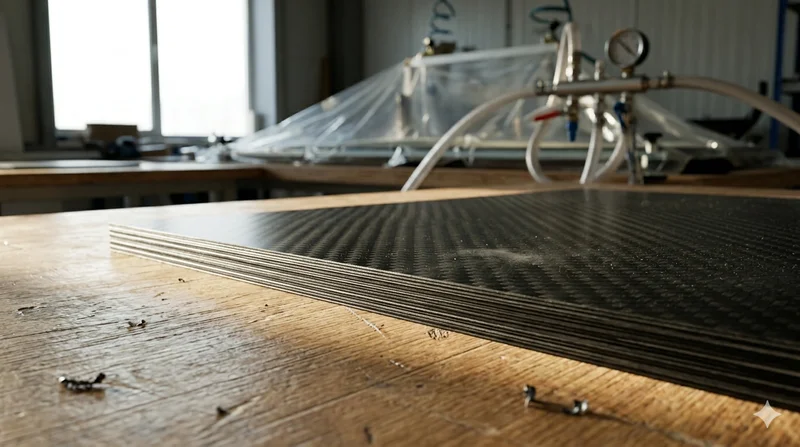
Medium-thickness 3.0mm carbon fiber plate offering significantly higher load capacity while maintaining attractive 3K twill finish. Suitable for structural brackets, reinforcement plates, and load-bearing panels.
Custom Carbon Fiber Medical Device Components
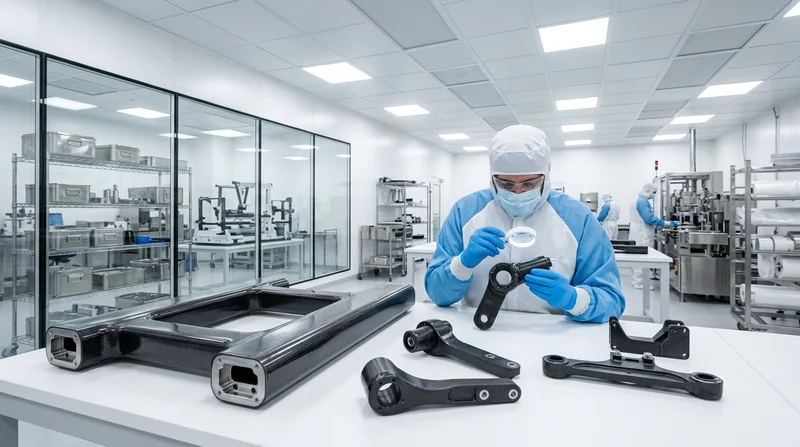
Medical-grade carbon fiber components manufactured for imaging equipment, surgical instruments, and patient support systems. Carbon fiber's radiolucency (X-ray transparency) and high strength-to-weight ratio make it ideal for CT scanner beds, wheelchair frames, surgical robot arms, and MRI-compatible accessories. Biocompatible resin systems available.
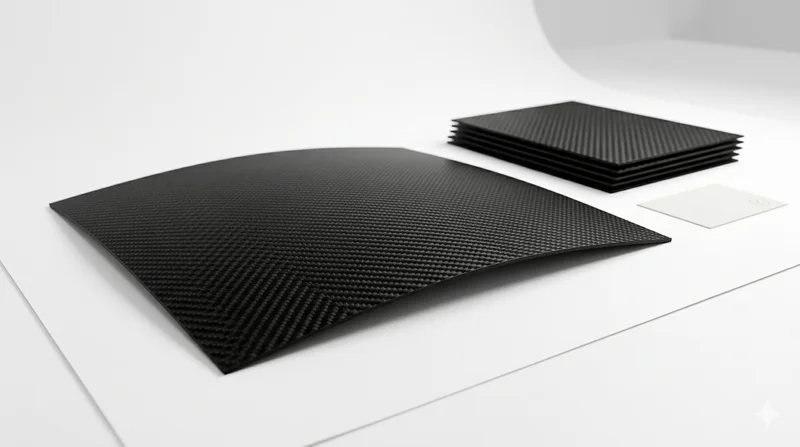
Carbon Fiber Plate — 3K Twill T700 1.5mm
Thin 1.5mm carbon fiber plate with 3K twill weave surface. Lightweight and stiff, commonly used for covers, panels, drone bodies, and applications requiring a premium aesthetic appearance.
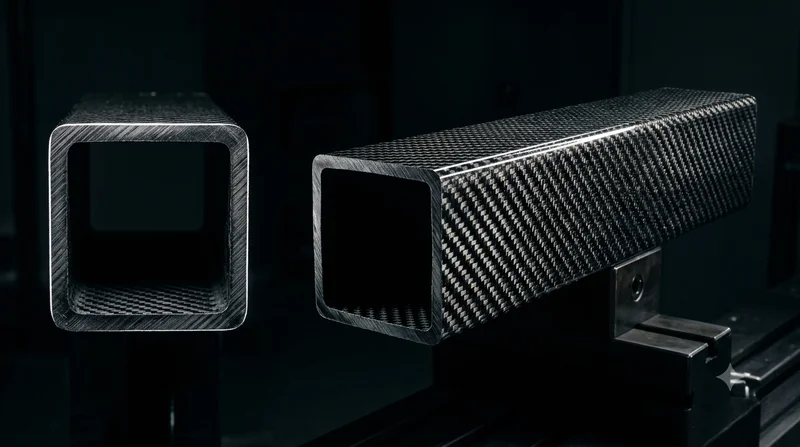
Square Carbon Fiber Tube — 3K Twill T700
Square cross-section carbon fiber tube manufactured with 3K twill weave for torsional strength. Preferred for structural frames, trusses, and support columns where rectangular geometry offers design flexibility.