
Chile's carbon fiber market in 2026 is defined by a single industrial reality: this narrow country produces roughly one quarter of the world's copper. That mining backbone drives demand for equipment that must survive extreme abrasion, corrosive brine, high-altitude dust, and seismic ac
Introduction
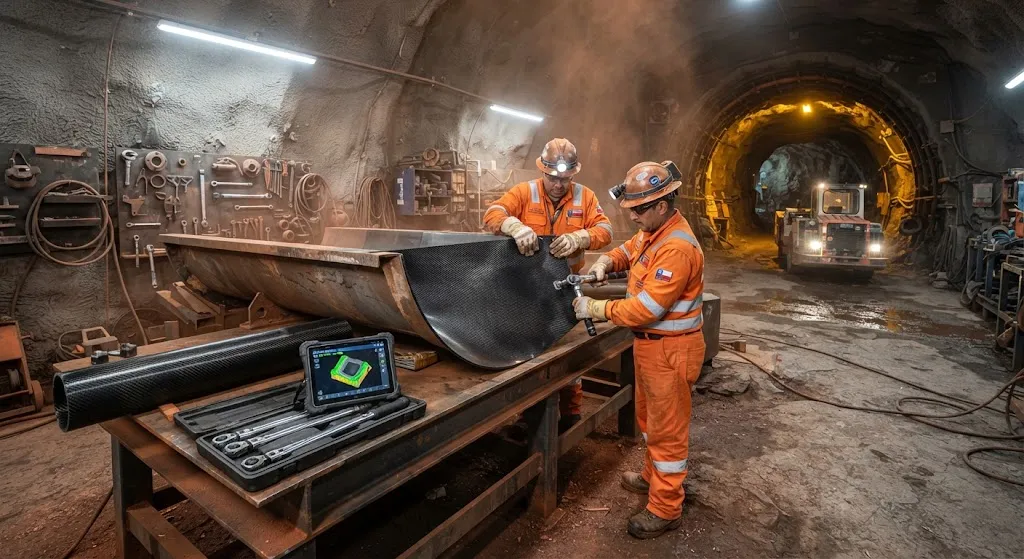
Chile's carbon fiber market in 2026 is defined by a single industrial reality: this narrow country produces roughly one quarter of the world's copper. That mining backbone drives demand for equipment that must survive extreme abrasion, corrosive brine, high-altitude dust, and seismic activity — conditions where carbon fiber's combination of light weight, stiffness, and corrosion resistance earns a clear premium. Around that core, two energy-driven segments are compounding: industrial desalination along the Atacama coast and one of the world's most aggressive solar expansion programs in the northern desert.
Chile's economy grew 2.3% in 2025, and the government's National Lithium Strategy and copper output targets keep mining investment elevated at roughly $75 billion through 2030, according to Cochilco, the state copper commission. Copper production reached 5.5 million tonnes in 2025. This article examines the mining equipment, desalination, and solar segments, and lays out a practical sourcing strategy for carbon fiber buyers.
Copper Mining Equipment: Wear, Weight, and Corrosion Resistance
Chile's copper industry operates the world's largest open-pit and underground mines — Escondida, Chuquicamata, El Teniente, and Collahuasi among them — at altitudes up to 4,500 meters in the Andes. Mining equipment here faces punishing conditions: abrasive ore dust, sulfuric acid in leaching operations, saline water in coastal processing, and constant seismic risk. Carbon fiber is penetrating this segment in four application groups:
- Drilling and blasting components: Carbon fiber drill rods and guide tubes reduce weight on jumbo drill rigs, cutting fuel consumption and improving hole accuracy in underground development.
- Conveyor and processing wear parts: Lightweight carbon fiber chutes, liners, and inspection doors for conveyor systems, replacing steel where corrosion and weight both matter.
- Maintenance access equipment: Composite work platforms, ladders, and scaffolding for mill relining and crusher maintenance — cutting setup time in confined spaces.
- Autonomous haulage systems: Sensor and communication mounts, antenna radomes, and lightweight camera gantries for the driverless trucks now standard at Escondida and other large sites.
Codelco, the state miner, and BHP's Escondida continue to invest in automation and digitalization; the driverless truck fleet at Escondida alone exceeds 100 units. Each automated truck carries multiple composite sensor structures, creating a steady, repeatable demand that component suppliers can forecast.
Desalination: Corrosion-Resistant Components for the Atacama Coast
Northern Chile has no natural fresh water, so the mining industry has turned to the Pacific. The region now hosts some of the largest desalination plants in the world — Escondida Water Supply's facility at Coloso produces about 2,500 liters per second, and a pipeline of new plants along the Antofagasta coast is under construction to supply both mines and cities. Desalination is a demanding environment for materials: high-pressure pumps, brine recirculation, and marine atmospheric salt attack degrade metals quickly.
Carbon fiber composite components are being specified in desalination for three reasons:
- Pump and valve components: Composite impellers, wear rings, and valve bodies in high-pressure reverse-osmosis trains resist cavitation and chloride attack better than bronze or stainless steel.
- Pipe and duct systems: Filament-wound CFRP piping for brine and concentrate lines, where steel corrodes within years and composites offer 20-30 year design lives.
- Intake and marine structures: Composite intake screens, gratings, and handrails exposed to the marine splash zone, eliminating painting and re-coating cycles.
Chile's desalination capacity is expected to grow from roughly 6,000 liters per second in 2025 toward 10,000 liters per second by 2030, according to industry estimates. Each plant represents a multi-year specification opportunity for corrosion-resistant composite components.
Solar Expansion: Lightweight Structures for the Northern Desert
The Atacama Desert receives some of the highest solar irradiation on Earth — over 2,500 kWh per square meter per year in the Antofagasta region, roughly double the European average. Chile's renewable auction system and corporate power-purchase agreements have driven a boom in utility-scale solar plants in the north, while energy storage and green hydrogen projects add a second layer of demand. Cumulative solar capacity passed 11 GW in 2025 and is projected to double by 2030.
| Segment | Scale (2026-2030) | Carbon Fiber Applications | Est. Composite Content (US$ M) |
|---|---|---|---|
| Utility solar plants | 5-8 GW new capacity | Tracker arms, cable management, inverter cooling structures | 30-55 |
| Concentrated solar power | 2-3 pilot plants | Mirror support frames, receiver tower components | 15-30 |
| Green hydrogen projects | 1-2 GW electrolyzer pipeline | Electrolyzer frames, gas handling structures | 10-20 |
| Desalination expansion | 3-5 new plants | Composite piping, pump components, intake structures | 25-45 |
Single-axis trackers, which now dominate Chilean solar farms, benefit directly from lightweight materials: reducing tracker arm weight cuts motor size and foundation cost, and composites also offer better electrical insulation than aluminum in the desert's high-voltage, high-dust environment.
The three demand pillars are not independent. Chile's northern mining cluster and its energy system are increasingly linked: mines buy power from solar plants, desalination plants consume solar electricity during the day, and green hydrogen projects propose to use both. This integration matters for composite suppliers because a single project — for example, a new copper concentrator in the Antofagasta region — now specifies solar tracking structures, desalination piping, and process equipment within the same procurement cycle. Suppliers able to offer components across these categories position themselves for larger, bundled orders and for the maintenance contracts that follow commissioning.
Supply Chain Structure and Import Dynamics
Chile has no domestic carbon fiber production. All material is imported — primarily from Japan (Toray), the United States (Hexcel, Solvay), and increasingly China (Zhongfu Shenying, Guangwei). Because Chile's free trade agreements with the United States, the European Union, and China apply zero tariffs to most carbon fiber products, import costs are dominated by logistics rather than duty. The main logistics consideration is the 4,500-kilometer north-south geography: most mining and energy demand sits in the north (Antofagasta region), while the main ports of entry are Valparaiso and San Antonio in central Chile.
Local composite conversion is limited but growing. A small number of Chilean companies perform pultrusion, filament winding, and hand layup for mining and marine applications, and the mining industry's strong safety culture has driven adoption of composite access equipment. Most high-performance components, however, are still imported complete. Buyers typically work with overseas suppliers who can deliver full documentation packages and spare-part guarantees suited to remote mining sites.
Frequently Asked Questions
Is carbon fiber cost-effective for mining equipment in Chile?
Yes, when evaluated on total cost of ownership. A carbon fiber work platform or conveyor liner costs more upfront than steel, but it lasts 2-3 times longer in abrasive and corrosive service, requires no painting or re-coating, and reduces handling weight for maintenance crews. In high-altitude mines where every kilogram moved affects logistics, the weight savings compound across repeated maintenance cycles. Chilean mining companies increasingly run lifecycle cost models that favor composites in wear and corrosion applications.
Why is desalination such a strong market for carbon fiber in Chile?
Desalination plants concentrate seawater, then discharge brine at high pressure — an environment that attacks metals aggressively. Carbon fiber composites are chemically inert to chloride attack, resist cavitation erosion in pumps, and offer design lives of 20-30 years in brine service where stainless steel may fail within a decade. As Chile's mining water demand shifts from mountain aquifers to coastal desalination, the volume of corrosive piping, pump components, and marine structures specified in composites is growing steadily.
How do Chilean import duties affect carbon fiber sourcing?
They barely matter for most products. Chile's free trade agreements with the United States, China, the European Union, and Japan eliminate duties on virtually all carbon fiber materials and components. The practical considerations are logistics and documentation: shipping into Valparaiso or San Antonio, then inland transport north to mining regions, plus customs documentation that must match the mining industry's strict supplier qualification requirements. No export control regime comparable to other regions applies.
Conclusion
Chile's carbon fiber market in 2026 is a niche but structurally growing opportunity anchored by the world's largest copper industry. Mining equipment demand is the core: wear parts, access structures, and automation components specified on lifecycle cost. Desalination adds corrosion-resistant piping and pump components as the Atacama coast industrializes its water supply. And the northern solar boom — the world's highest-irradiation desert — is beginning to specify lightweight composite tracker and infrastructure components. With zero domestic production and duty-free access, Chile is an accessible market for overseas suppliers with strong quality documentation.
For buyers serving Chilean mining, energy, or water infrastructure, the practical path is to combine high-performance imported components with local integration and maintenance support. Browse our carbon fiber product range to identify components suited to mining, desalination, and solar applications, or contact our engineering team for a market-entry assessment with pricing and lead-time projections for Chile.
Part of topic
Related Articles
Interested in Our Products?
Contact our team for competitive pricing and technical specifications.
Get a QuoteRelated Products
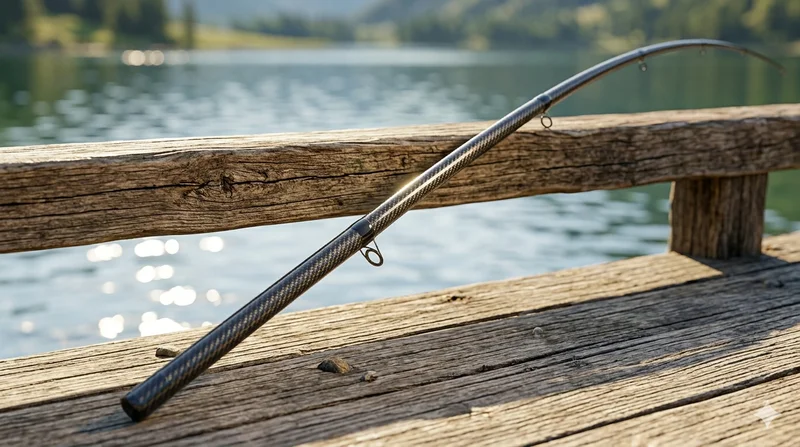
Carbon Fiber Fishing Rod Blank
High-quality carbon fiber fishing rod blank manufactured from multiple grades of Toray carbon fiber cloth. Available in a wide range of lengths, powers, and actions for freshwater and saltwater applications. Suitable for OEM rod building.

Carbon Fiber Plate — 3K Twill T700 1.5mm
Thin 1.5mm carbon fiber plate with 3K twill weave surface. Lightweight and stiff, commonly used for covers, panels, drone bodies, and applications requiring a premium aesthetic appearance.

Carbon Fiber Plate — 3K Twill T700 3.0mm
Medium-thickness 3.0mm carbon fiber plate offering significantly higher load capacity while maintaining attractive 3K twill finish. Suitable for structural brackets, reinforcement plates, and load-bearing panels.
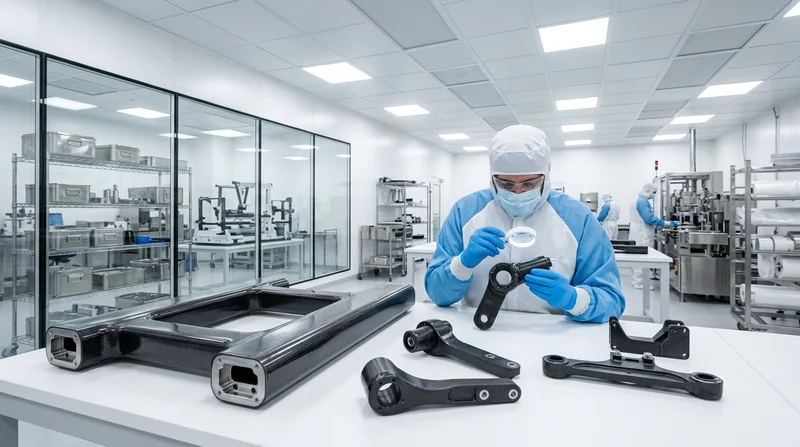
Custom Carbon Fiber Medical Device Components
Medical-grade carbon fiber components manufactured for imaging equipment, surgical instruments, and patient support systems. Carbon fiber's radiolucency (X-ray transparency) and high strength-to-weight ratio make it ideal for CT scanner beds, wheelchair frames, surgical robot arms, and MRI-compatible accessories. Biocompatible resin systems available.

Square Carbon Fiber Tube — 3K Twill T700
Square cross-section carbon fiber tube manufactured with 3K twill weave for torsional strength. Preferred for structural frames, trusses, and support columns where rectangular geometry offers design flexibility.