
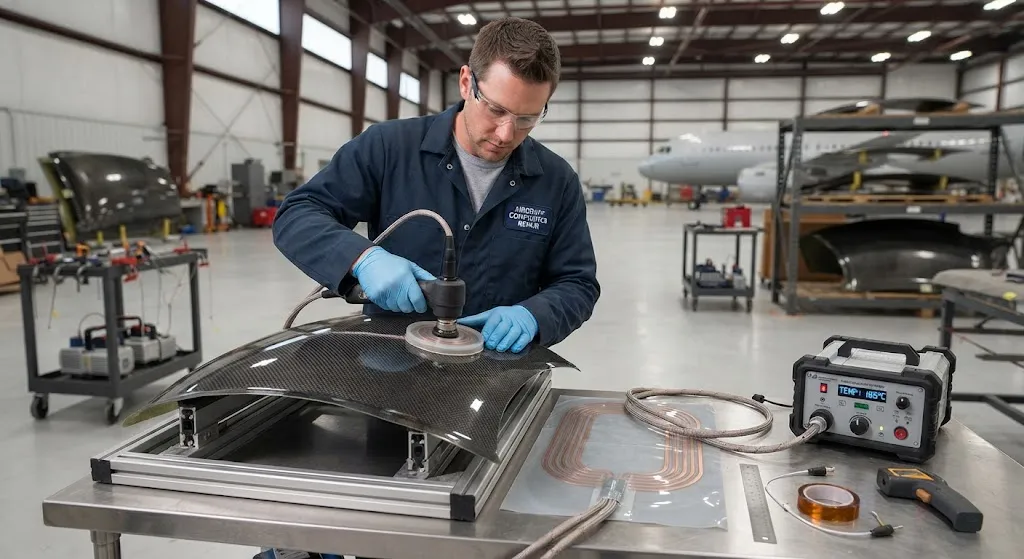
Induction welding of thermoplastic composites is gaining ground as a fast, repeatable joining method for carbon fiber reinforced thermoplastic (CFRTP) structures. Unlike thermoset composites, which are normally bonded with adhesives or fastened with bolts and rivets, thermoplastic compo
Introduction
Induction welding of thermoplastic composites is gaining ground as a fast, repeatable joining method for carbon fiber reinforced thermoplastic (CFRTP) structures. Unlike thermoset composites, which are normally bonded with adhesives or fastened with bolts and rivets, thermoplastic composites can be welded because their matrix melts and re-solidifies. Induction welding uses a coil to generate an alternating magnetic field that heats a conductive layer placed at the joint, softening the polymer matrix on both sides of the interface until the parts fuse under light pressure.
For repair teams and production engineers, induction welding matters because it removes the two biggest bottlenecks in composite joining: surface preparation and cure time. There is no peel ply removal, no grit blasting, no adhesive mixing and no multi-hour cure at elevated temperature. A well-tuned induction weld on a carbon fiber PEEK, PAEK or PA6 laminate can be completed in one to three minutes, and the joint can be opened again for rework, which is impossible with thermoset adhesives. This article covers the physics of the process, the susceptor options available today, the key process parameters, and the repair scenarios where induction welding delivers the strongest return.
How Induction Welding Works
The process relies on eddy currents and magnetic hysteresis rather than contact heat. A water-cooled copper coil, shaped to follow the weld line, carries a high-frequency alternating current. The magnetic field induces eddy currents in a susceptor — a conductive or magnetic layer embedded at the joint — which heats up through resistive (Joule) heating and, in ferromagnetic susceptors, through magnetic hysteresis losses as well. The heat conducts into the surrounding matrix, melting it, while the coil never touches the part.
Heat generation is localized to the joint, which is exactly what repair work needs:
- No thermal damage to the bulk laminate: Because the workpiece itself is not placed in an oven, the fibers and matrix away from the weld line stay below their degradation temperature, preserving the mechanical properties of the repaired region.
- Controlled heating zone: Coil geometry, frequency and power can be adjusted so the melt zone matches the intended weld width, typically 15-40 mm for structural joints.
- Repeatable pressure: The parts are clamped during heating and held as the joint cools, so consolidation quality does not depend on operator skill.
- Reversible joints: A completed weld can be re-heated and separated, enabling part salvage and repair of misassembled components that waste money when scrapped.
Because the induction field heats the susceptor and not the carbon fibers themselves, the process works even with non-conductive resin systems and with laminates whose fibers are oriented in ways that would make direct resistance heating unpredictable.
Susceptor Heating Layers
The choice of susceptor determines the heating rate, the final joint strength and whether the weld line remains conductive after joining. Three families of susceptors dominate commercial practice:
| Susceptor | Heating Mechanism | Typical Thickness | Advantages | Considerations |
|---|---|---|---|---|
| Stainless steel or copper mesh | Eddy current (resistive) | 0.05-0.2 mm | High heating rate, low cost, adds lightning-strike shielding | Remains conductive in the joint; stress concentration at mesh edges |
| Carbon nanotube (CNT) nano-film | Eddy current (resistive) | 0.01-0.05 mm | Very thin, negligible weight, low thermal inertia | Higher resistivity requires tighter coil coupling and careful tuning |
| Ferromagnetic particle polymer layer (Fe3O4, Ni) | Magnetic hysteresis | 0.1-0.4 mm | Heats even where eddy paths are interrupted; even heat distribution | Particle loading adds cost; layer must be co-laminated |
For aerospace and demanding structural repairs, ferromagnetic susceptors are often preferred because hysteresis heating is less sensitive to coil alignment and produces a more uniform temperature across the weld width. Metal mesh remains popular in cost-sensitive industrial applications such as pipe fittings and transport panels, where residual conductivity is either acceptable or even desirable. CNT films, still the newest option, suit applications where every gram counts and where a barely visible weld line is a requirement, as in sports equipment and medical housings.
Process Parameters and the Welding Window
A successful induction weld is the product of four interacting parameters: frequency, coil power, heating time and consolidation pressure. Typical starting windows for carbon fiber reinforced PA6, PEEK and PAEK laminates are summarized below:
| Parameter | Typical Range | Effect on Weld Quality |
|---|---|---|
| Frequency | 10 kHz - 1 MHz | Determines penetration depth; higher frequencies favor thin susceptors |
| Coil power density | 0.5-4 W/mm² at the joint | Too low: under-melting; too high: matrix degradation or foaming |
| Heating time | 20-120 s per joint segment | Balances full melt through vs. excess heat soak into the laminate |
| Consolidation pressure | 0.2-1.0 MPa | Drives out voids and ensures intimate contact for molecular diffusion |
| Cooling rate | 5-30 °C/min under pressure | Controls crystallinity in semi-crystalline matrices; slow cooling reduces warpage |
Quality verification after cooling typically includes single-lap shear testing on coupons with the same layup and susceptor, and ultrasonic inspection of the weld line for porosity. Well-consolidated induction welds in carbon fiber PEEK commonly reach 85-95% of the matrix shear strength in single-lap shear, which is on par with co-consolidated (fusion) joints and above typical adhesively bonded values when peel issues are considered.
Repair and Rework Applications
The reversibility of induction welding makes it uniquely suited to repair operations:
- Patch repairs on aircraft interior and secondary structure: A damaged CFRTP panel can be scarfed, a pre-consolidated patch of the same material inserted, and the patch welded in place with a portable coil and tooling frame, restoring strength in minutes instead of the hours needed for an adhesive patch cure.
- Disassembling defective assemblies: A mis-bonded skin-to-frame joint can be re-heated, separated, cleaned and re-welded, salvaging parts that would otherwise be scrapped.
- Joining repair inserts and doublers: Reinforcement straps over cracked areas can be induction-welded without drilling fastener holes that would weaken the remaining section.
- Pipe and duct repair: Thermoplastic composite pipes and ducts in industrial and marine service are repaired with induction-heated coupling sleeves, avoiding open flames and volatile adhesives in confined spaces.
Field repair kits for thermoplastic composites now include portable induction generators, flexible mats with embedded coils, and thermocouple feedback that logs the thermal history for QA records. This makes induction welding one of the few composite joining techniques that works as well on a hangar floor as it does in a factory.
Comparison with Other Welding Methods
Ultrasonic welding, resistance welding and induction welding all fuse thermoplastic composites, but each trades off different characteristics. The table below summarizes the practical differences:
| Criterion | Induction Welding | Ultrasonic Welding | Resistance Welding |
|---|---|---|---|
| Heating source | Magnetic field + susceptor | Mechanical vibration + horn | Electrical current in heating element |
| Joint size per pass | Large areas, contoured paths | Limited by horn size, spot or short seam | Long straight seams |
| Permanent heating element | Susceptor remains in joint | No (energy director may remain) | Heating element remains in joint |
| Tooling complexity | Medium (coil + clamping frame) | High (sonotrode and fixture) | Low (electrodes + clamping) |
| Best fit | Repairs, curved seams, thick joints | Small parts, high-rate spot welding | Straight lap joints in panels |
In repair environments, induction welding has a decisive practical advantage: the coil can be a flexible mat or a hand-positioned tool that conforms to curved surfaces, whereas ultrasonic horns are rigid and resistance welding requires electrodes spanning the full seam. For production lines welding long straight joints in panels, resistance welding often wins on simplicity; for small mass-produced components such as brackets and electronic housings, ultrasonic welding remains the fastest per cycle.
Frequently Asked Questions
Can induction welding join thermoplastic parts to metal or thermoset components?
Induction welding joins thermoplastic to thermoplastic. Where one side is metal or a thermoset composite, engineers typically use a hybrid approach: the thermoplastic part is induction-welded to a thermoplastic carrier, which is then adhesively bonded or mechanically fastened to the metal or thermoset structure. This is common in aircraft interiors where thermoplastic panels are mounted onto thermoset-based frames.
Does the susceptor weaken the welded joint?
The susceptor stays inside the weld line and can act as a local stress concentrator, which is why single-lap shear coupons with mesh susceptors sometimes show slightly lower apparent strength than fusion joints without susceptors. The effect is minimized by using thin, fine-pitch meshes or ferromagnetic particle layers, and by keeping the susceptor inside the melt zone rather than at the laminate surface. In practice, welds with well-chosen susceptors still reach 85-95% of matrix shear strength, comfortably above most design allowables.
How repeatable is induction welding compared with adhesive bonding?
Induction welding is inherently more repeatable because the thermal history is machine-controlled: frequency, power and time are set on the generator, and thermocouple or pyrometer feedback closes the loop. Adhesive bonding depends on surface preparation quality, mixing accuracy and cure conditions, all of which vary between operators. That reproducibility, plus the ability to re-open a bad joint, is the main reason repair organizations are adopting induction welding for thermoplastics.
What thickness of laminate can be induction welded?
Induction welding works on laminates from thin skins of 0.5 mm up to sections of 20 mm or more, because only the joint interface needs to melt. The coil power and heating time must be scaled to the heat sink effect of thicker parts, and thicker laminates often use longer heating times at lower power density to avoid overheating the interface before the through-thickness temperature evens out. Most industrial applications fall in the 1-10 mm range.
Conclusion
Induction welding gives thermoplastic composite users a joining method that is fast, repeatable and reversible, with no surface preparation and no cure cycle. By localizing heat at the joint, it protects the bulk laminate, enables curved and three-dimensional weld paths, and supports repair scenarios — patch installation, assembly rework, doubler attachment — that adhesive systems handle poorly. As more carbon fiber applications move from thermosets to PEEK, PAEK and PA6 matrix systems, induction welding is becoming a standard capability in both repair shops and production lines.
YongXian supplies carbon fiber fabrics, prepregs and thermoplastic composite materials for welded and bonded structures. Explore our carbon fiber product range or contact our engineering team to discuss material systems and welding support for your CFRTP program.
Part of topic
Related Articles
- Filament Wound FRP Pipe: Complete Guide
- Filament Wound Epoxy Tubes: Complete Guide
- Pultruded Carbon Fibre Rods: Cross-Sectional Properties and Standard Sizes
- Carbon Fiber Tube Fittings and Connectors: Joining Solutions for Structural Assemblies
- Carbon Fiber Plate Insert: Threaded Insert Design for Composite Structures
- Filament Wound Epoxy Tubing: Selection Guide for Industrial and Aerospace Applications
Interested in Custom Carbon Fiber Products?
Contact our team for competitive pricing and technical specifications.
Get a QuoteRelated Products
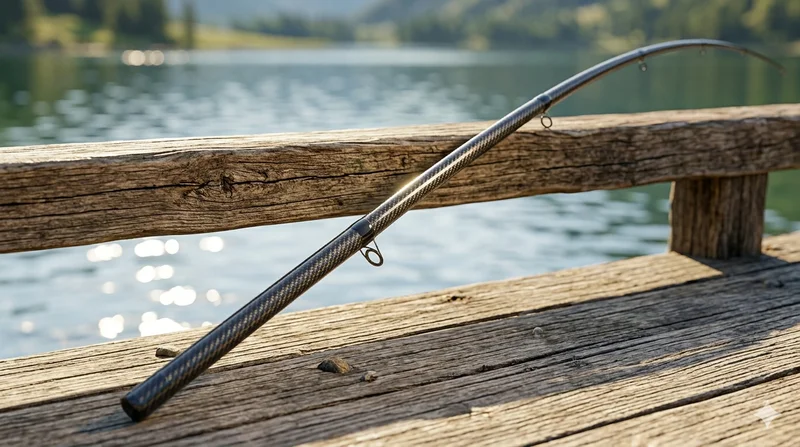
Carbon Fiber Fishing Rod Blank
High-quality carbon fiber fishing rod blank manufactured from multiple grades of Toray carbon fiber cloth. Available in a wide range of lengths, powers, and actions for freshwater and saltwater applications. Suitable for OEM rod building.
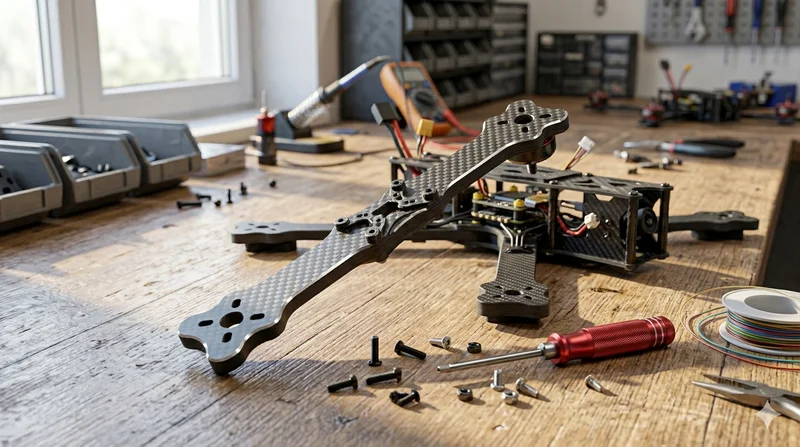
Carbon Fiber Drone Arm
Precision-molded carbon fiber drone arm combining unidirectional fiber for stiffness and woven layers for torsional strength. Designed for FPV, photography, and industrial drone platforms. Each arm is CNC-machined to exact specifications.