
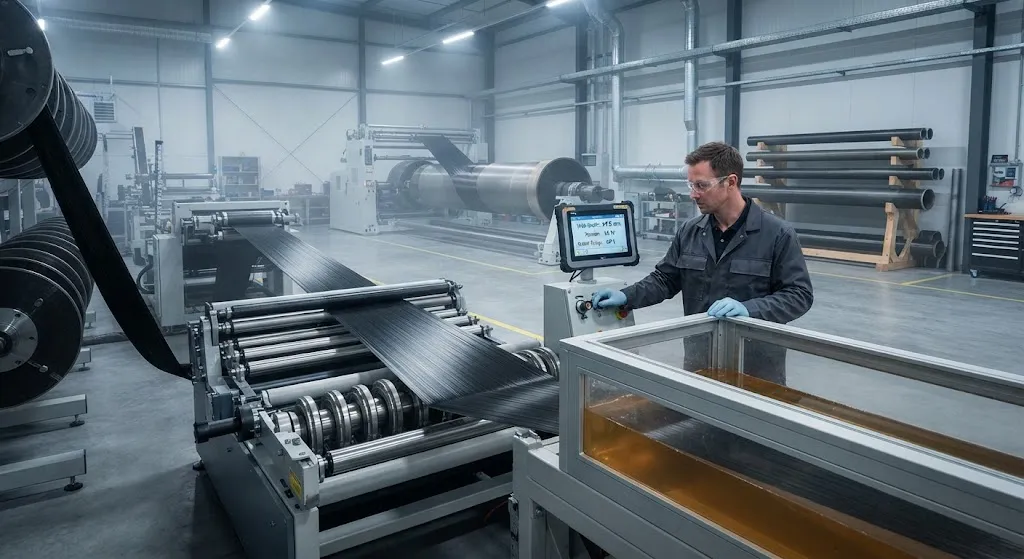
Large-tow carbon fiber is the workhorse of the industrial composites economy. Where aerospace parts demand the precision of 3K and 12K tows, wind turbine blades, pressure vessels and construction profiles are increasingly specified in 48K and 60K formats that cut fiber cost per kilogram
Introduction
Large-tow carbon fiber is the workhorse of the industrial composites economy. Where aerospace parts demand the precision of 3K and 12K tows, wind turbine blades, pressure vessels and construction profiles are increasingly specified in 48K and 60K formats that cut fiber cost per kilogram and raise deposition rates. The distinction matters commercially: small tows deliver strength but at a price premium, while 60K large-tow products can lower reinforcement cost by 20-30 percent and are produced on the high-speed precursor lines that define modern industrial fiber supply.
Cheaper fiber, however, is not free. A 60K tow packs 60,000 filaments into a roving that may be 12-15 millimeters wide and hundreds of times heavier per meter than a 3K tow (a 60K tow at 2400 tex is roughly twenty times the linear density of a 12K tow at 800 tex). Wet-out, spreading and tension behavior all change with tow size, and processes tuned for 12K fail predictably when a 60K product is substituted without adjusting the parameters. This article details where those processing differences appear — in resin pickup, in spreading width and quality, and in winding — and what industrial users must change to run 60K efficiently.
What Changes When a Tow Grows to 60K
The jump from 12K to 60K is not a gradual scaling of the same behavior; it is a regime change in fiber engineering. The table below compares typical parameters for three common tow formats:
| Tow Format | Typical Linear Density | Approx. Width (spread) | Filament Count | Typical Tensile Modulus | Cost Index |
|---|---|---|---|---|---|
| 12K (aerospace grade) | 800 tex | 6-8 mm | 12,000 | 230-240 GPa | 1.0 (reference) |
| 24K (intermediate) | 1600 tex | 8-10 mm | 24,000 | 230-240 GPa | 0.85 |
| 60K (industrial large-tow) | 2400 tex | 12-15 mm | 60,000 | 230-240 GPa | 0.70 |
Three consequences follow directly from these numbers. First, the tow is heavier, so gravity and inertia influence fiber handling far more than in small-tow creels. Second, the ratio of surface area to mass falls, which changes how quickly resin can penetrate the bundle. Third, the filament count is five times that of a 12K tow, so any defect — a stray filament, a broken strand, a splice — is multiplied across the laminate. Each of these shifts demands a different processing response.
Resin Pickup: The Infiltration Bottleneck
Complete wet-out of 60,000 filaments is the first processing challenge. Resin must travel from the tow surface to the innermost filaments, and the path length is governed by tow compactness and width. Empirical results from wet-winding and pultrusion trials show:
- Packing density: A tightly bundled 60K tow has fewer and narrower interstitial channels than a spread 12K tow, so capillary infiltration slows visibly at constant resin viscosity.
- Resin viscosity window: For a 60K tow processed at line speeds above 30 meters per minute, the practical resin viscosity window narrows; viscosities that wet out 12K cleanly may leave a dry core in 60K unless the bath dwell time or spreading is increased.
- Dwell versus spreading: Processors typically compensate with longer bath dwell, higher bath temperature, or mechanical spreading before the bath — the most effective solution is to spread the tow first so resin reaches every filament before compaction.
In practice, resin pickup of a 60K tow is usually acceptable, but the distribution matters more than the total. A tow that is dry in the center and resin-rich at the surface produces fiber volume fraction gradients and porosity bands that show up as poor transverse strength on ultrasonic inspection. The reliable fix is controlled spreading prior to resin application, which brings the filament bundle from a circular cross-section toward a flat, tape-like section.
Tow Spreading: Turning a Roving into a Tape
Spreading is the single most powerful preparation step for large-tow processing. A spread tow of 60K converts to a band 40-80 millimeters wide with a flat aspect ratio, which changes resin pickup behavior completely:
- Faster infiltration: A 60-80 mm spread tow exposes nearly all filaments to resin in a single pass, reducing dry-filament risk to near zero.
- Better alignment: Spread fibers lie straighter and more uniformly, improving the load transfer efficiency and the tensile modulus utilization in the final laminate.
- Lower void content: Flat, uniformly spaced filaments compact into higher fiber volume fraction packs with fewer resin-rich seams, which measurably improves interlaminar properties and fatigue life.
Spreading technology for 60K is now mature: pneumatic spreaders, vibrating rollers and ultrasonic spreaders routinely reach 60-80 mm effective width, depending on filament modulus and sizing chemistry. The trade-off is speed — aggressive spreading slows line speed and increases fiber damage risk if the spreader settings exceed the tow's tolerance. Industrial users should qualify spreading parameters on each fiber lot, because slight differences in sizing content change the optimum spreader force.
Winding Performance and Tension Windows
Where small-tow winding is a controlled, precise operation, large-tow winding is a battle against gravity, inertia and consolidation time. A 60K tow at realistic winding speeds delivers significantly more mass per unit length than 12K, so the resin between layers must be redistributed over a longer path before gelation. Tension behaves differently too: because the tow is heavier, the tension setpoint must rise, but excessive tension on a wide, flat tow can fold the band edge and trap air.
Published winding experience with large tows suggests a useful comparison:
| Processing Parameter | 12K / 24K Validation | 60K Practical Range | Failure Mode if Ignored |
|---|---|---|---|
| Typical winding tension | 8-16 N per tow | 20-40 N per tow | Slippage, band folding |
| Spread width before winding | 6-10 mm | 40-60 mm | Uneven layer, trapped air |
| Resin bath dwell | 1-2 s | 2-4 s | Dry core, surface porosity |
| Typical line speed | 40-60 m/min | 20-40 m/min | Incomplete wet-out |
The practical takeaway is that 60K winding rewards slower, better-prepared processing: spread the tow, extend dwell, and run the line at a speed the resin can follow. When these are controlled, large-tow winding produces laminates with fiber volume fraction in the 58-62 percent range — comparable to small-tow results at a fraction of the material cost.
Blade and Industrial Applications Driving Demand
The demand surge for 60K follows two directions. Wind energy is the largest: blade spar caps and shear webs in megawatt-class turbines are built from carbon fiber pultruded plates, and the plate producers have standardized on large-tow formats to hold down cost per blade. Deep-sea offshore wind, where blade lengths routinely exceed 100 meters, has pushed fiber volume over 60 percent in spar cap laminates and made consistent 60K supply a procurement priority.
The second direction is industrial large-tow consumption in pressure vessels, pultruded profiles, automotive structural parts and construction reinforcement. These applications share one requirement: consistent quality at high throughput. A 60K tow that spreads cleanly, wets out fully and winds predictably can reduce total processing cost by 15-25 percent versus a 12K equivalent, once the process parameters are re-validated for the larger format.
Frequently Asked Questions
Why is 60K large-tow carbon fiber cheaper than 12K?
Large-tow production uses high-throughput precursor lines with wider oxidation ovens and faster processing, lowering cost per kilogram of fiber. A 60K tow also deposits more reinforcement per machine pass, reducing the labor and machine time per kilogram in downstream processes such as pultrusion and winding. Industrial grades relax some aerospace-grade specification tolerances, and that relaxed spec is exactly what wind blade and construction applications need — performance at industrial cost.
Can 60K tows replace 12K tows in existing winding and pultrusion lines?
Yes, but not by direct substitution. The line must be re-validated for spreading width, resin bath dwell, line speed and tension setpoint, because the heavier tow behaves differently in each. In practice, users add a spreading station, adjust the bath temperature and dwell, and reduce line speed — after which 60K produces comparable laminate quality. Attempting to run a 60K tow through a 12K-optimized process typically yields dry cores and porosity.
How is resin pickup controlled for a 60K tow in production?
Control happens in three places: the spreader sets an even filament distribution, the resin bath is tuned for viscosity and dwell, and the tension/wiping geometry controls how much resin stays on the tow. Verification is quantitative — fiber volume fraction by digestion, ultrasonic C-scan for porosity, and periodic cross-section microscopy. A well-set 60K process holds fiber volume fraction at 58-62 percent and void content below 1 percent, matching small-tow laminates.
Conclusion
60K large-tow carbon fiber brings a fundamental processing shift, not a simple cost saving. The heavier tow demands spreading before resin application, longer dwell and adjusted tension, and it rewards users who re-validate their lines for the larger format instead of substituting it into a 12K process. The payoff is substantial: reinforcement cost reductions of 20-30 percent, higher deposition rates and laminate quality that — with the right process window — matches small-tow performance. With domestic 60K supply now available in China and wind and industrial demand accelerating, the processors who build their skills around large-tow handling will hold the cost advantage.
For manufacturers adapting their lines to large-tow formats, the practical starting point is fiber selection and process qualification support. Explore our industrial large-tow carbon fiber grades, or contact our engineering team to discuss spreading, resin pickup and winding parameters for your 60K conversion program.
Part of topic
Related Articles
- Pultruded Carbon Fibre Rods: Cross-Sectional Properties and Standard Sizes
- Carbon Fiber Tube Fittings and Connectors: Joining Solutions for Structural Assemblies
- Carbon Fiber Plate Insert: Threaded Insert Design for Composite Structures
- Filament Wound Epoxy Tubing: Selection Guide for Industrial and Aerospace Applications
- Filament Wound Epoxy Tubes Advantages: Over Metal and Pultruded Alternatives
- Carbon Fiber Tube Strength: Analysis Methods and Design Allowables
Interested in Our Products?
Contact our team for competitive pricing and technical specifications.
Get a QuoteRelated Products
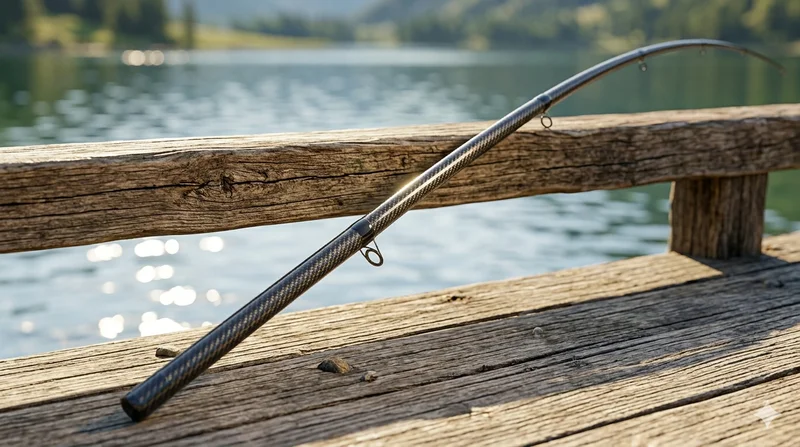
Carbon Fiber Fishing Rod Blank
High-quality carbon fiber fishing rod blank manufactured from multiple grades of Toray carbon fiber cloth. Available in a wide range of lengths, powers, and actions for freshwater and saltwater applications. Suitable for OEM rod building.
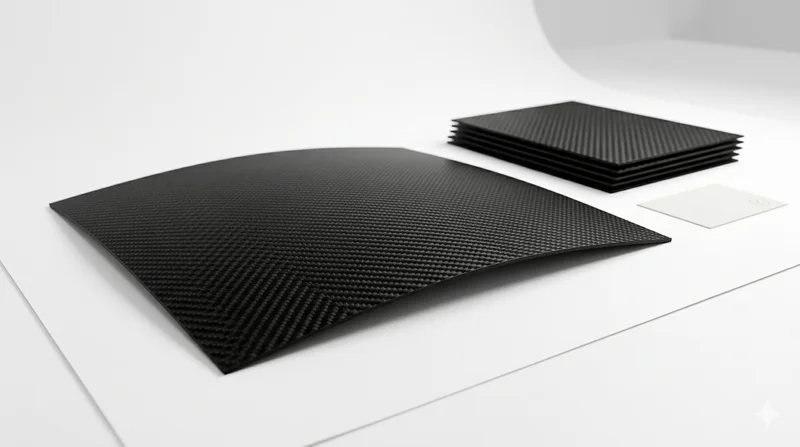
Carbon Fiber Plate — 3K Twill T700 1.5mm
Thin 1.5mm carbon fiber plate with 3K twill weave surface. Lightweight and stiff, commonly used for covers, panels, drone bodies, and applications requiring a premium aesthetic appearance.
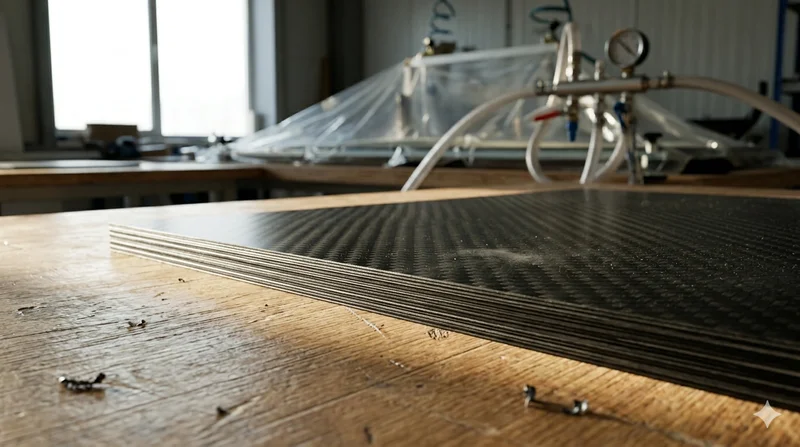
Carbon Fiber Plate — 3K Twill T700 3.0mm
Medium-thickness 3.0mm carbon fiber plate offering significantly higher load capacity while maintaining attractive 3K twill finish. Suitable for structural brackets, reinforcement plates, and load-bearing panels.
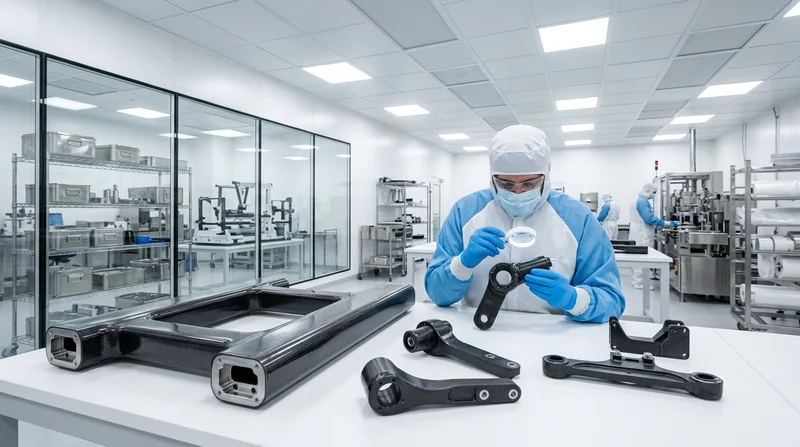
Custom Carbon Fiber Medical Device Components
Medical-grade carbon fiber components manufactured for imaging equipment, surgical instruments, and patient support systems. Carbon fiber's radiolucency (X-ray transparency) and high strength-to-weight ratio make it ideal for CT scanner beds, wheelchair frames, surgical robot arms, and MRI-compatible accessories. Biocompatible resin systems available.
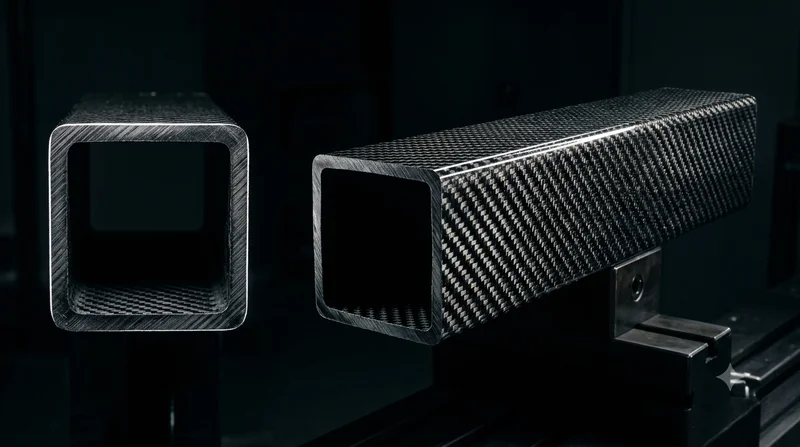
Square Carbon Fiber Tube — 3K Twill T700
Square cross-section carbon fiber tube manufactured with 3K twill weave for torsional strength. Preferred for structural frames, trusses, and support columns where rectangular geometry offers design flexibility.