
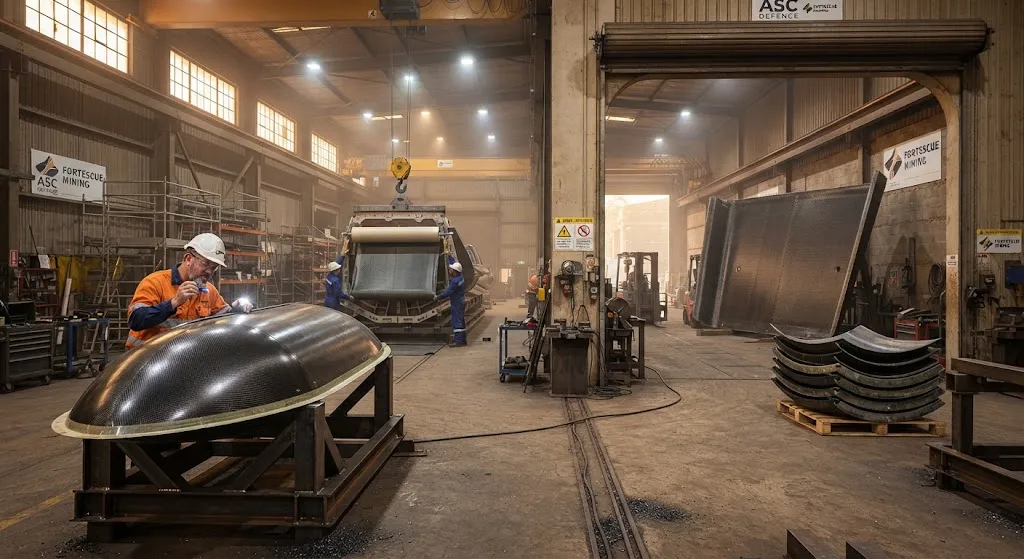
Australia produces less carbon fiber domestically than it consumes, yet it is one of the most dynamic procurement markets in Asia-Pacific for engineered composite hardware. The reason is not volume but program intensity: the country has committed to the SSN-AUKUS submarine alliance, ope
Introduction
Australia produces less carbon fiber domestically than it consumes, yet it is one of the most dynamic procurement markets in Asia-Pacific for engineered composite hardware. The reason is not volume but program intensity: the country has committed to the SSN-AUKUS submarine alliance, operates some of the largest open-pit mines on earth, and is positioning itself as a top-three exporter of green hydrogen. All three programs consume carbon fiber in forms that range from tension-critical submarine structures to abrasion-dominated mining liners, and each places different demands on material suppliers.
For a supplier or specifier entering this market, the practical question is not whether Australia will buy carbon fiber, but which grade, which conversion route, and which qualification path each program requires. This article quantifies the three demand clusters — defense, mining, and hydrogen — with representative technical and market data, and translates them into sourcing decisions.
The AUKUS Submarine Program: Defense Demand with a Ten-Year Horizon
The centerpiece of Australian defense composite demand is the SSN-AUKUS program, under which Australia will acquire nuclear-powered, conventionally-armed submarines in the 2030s and 2040s. The program combines an immediate transition phase — operating Virginia-class submarines leased from the United States — with a longer build phase in Adelaide for the SSN-AUKUS design. For composites, the timeline matters more than the headline numbers: the submarine support and sustainment industry being stood up around Adelaide and Perth will need qualified suppliers for the life of the fleet, not just for the build.
Carbon fiber content in modern submarines appears in several defined applications: propulsor shaft covers and shrouds, sonar dome windows and fairings, mast and periscope enclosures, hatch covers, and internal structural panels where non-magnetic or corrosion-resistant behavior is required. These parts favor intermediate-modulus aerospace-grade tow, prepreg tape and woven fabrics, processed under aerospace traceability disciplines. Defense buyers in this segment require materials with full pedigree — every spool documented, cured laminates inspected with ultrasonic methods, and suppliers approved through long qualification programs.
Mining Equipment in the Pilbara: Corrosion-First Specifications
The mining cluster is the most immediate and volume-relevant demand for carbon fiber in Australia today. The Pilbara region of Western Australia moves more iron ore than any other mining district on the planet, and its equipment operates in conditions that punish metals: salt-laden coastal air at ports like Port Hedland, abrasive ore dust, and 24-hour duty cycles on haul roads. Composite components win here on corrosion resistance and weight, not on headline strength.
The highest-volume composite applications in Australian mining are wear and structural liners, dump-truck bodies and tray liners, slurry and dust-handling components, and cable and ducting systems. A carbon fiber body liner can reduce the unloaded mass of a 300-tonne haul truck by several tonnes, directly increasing payload per cycle, while resisting the chemical attack of acidic ore fines far better than steel. In processing plants, composite chutes, launders, and pipe systems replace corroded steel on two-to-five-year maintenance cycles. These applications are cost-driven: they use industrial-grade carbon fiber, often 50K tow or higher, converted through pultrusion, wrapping, and hand-lay processes, with qualification centered on abrasion resistance and environmental durability rather than aerospace pedigree.
The Hydrogen Export Corridor: Pressure and Compatibility Demand
Australia has announced a series of green hydrogen projects, including the Western Green Energy Hub and export hubs on the Pilbara coast, targeting major Asian markets. The export chain — electrolysis, compression, storage, shipping as ammonia or liquid hydrogen, and regasification — creates demand for carbon fiber in two principal hardware families: Type IV composite pressure vessels for storage and transport, and composite-reinforced piping systems for hydrogen service.
Type IV tanks pair a polymer liner with a carbon fiber composite overwrap, the strong and fatigue-tolerant layer of the structure, and their burst performance depends on the fiber-to-resin ratio and winding pattern. Hydrogen embrittlement, which limits steel in hydrogen service, does not apply to carbon fiber, which is one reason composite overwrapped tanks dominate the mobile and stationary storage segments. For suppliers, the qualification demands are certification-driven: compliance with pressure vessel standards such as ASME or ISO 11439-type frameworks, proof and burst testing, and fatigue life demonstration over design cycles. The technology overlaps strongly with the CNG and hydrogen tank programs already served by filament winding lines in Asia and Europe.
Market Comparison: Three Demand Clusters Side by Side
The three clusters differ sharply in volume, specification level, and buying behavior. The table below compares them across the dimensions that matter to a fiber or preform supplier:
| Dimension | Defense (AUKUS) | Mining (Pilbara) | Hydrogen Export |
|---|---|---|---|
| Typical fiber grade | Intermediate modulus aerospace tow | Industrial 50K-plus tow | Standard modulus winding tow |
| Primary conversion route | Prepreg, autoclave cure | Pultrusion, wrapping, hand lay | Filament winding |
| Volume profile | Low volume, long program | High volume, recurrent | Scaling with project sanction |
| Lead qualification driver | Aerospace traceability | Abrasion and corrosion testing | Pressure vessel certification |
| Price sensitivity | Low | High | Medium |
| Horizon | 2030s-2040s | Now | Late 2020s-2030s |
Two structural observations follow from the table. First, the three clusters are complementary rather than competitive: a supplier serving all three needs a dual-track material strategy, with aerospace-grade tow for defense and industrial tow for mining, bridged by winding-grade tou for the hydrogen segment. Second, none of the clusters rewards a spot-market sales approach. Australia purchases carbon fiber through engineering procurement processes, long supplier agreements, and certification-led evaluation, which rewards suppliers who engage early with program-level requirements.
Buying Considerations for the Australian Market
- Qualification lead times: Defense and pressure-vessel applications carry qualification cycles of 12-24 months. Engage before the specification is frozen, and supply documentation-ready material data.
- Local content expectations: Federal and state defense policies push for local fabrication and sustainment. Supplying tow, fabric, or prepreg to Australian converters is often the fastest route into these programs.
- Climate and logistics: Long maritime shipping lanes and humid port conditions make moisture-barrier packaging and shelf-life management contract-relevant terms for prepreg and towpreg shipments.
- Volume commitments: Mining and hydrogen purchases reward framework agreements with predictable pricing, while defense demand rewards technical engagement over price.
- Standards alignment: Confirm whether the target application certifies to Australian, US, or international standards — the AUKUS program and Australian pressure vessel rules both reference international frameworks.
Frequently Asked Questions
Is there carbon fiber manufacturing in Australia, and do buyers import most material?
Australia has limited domestic carbon fiber production, with most fiber imported from Asia, Europe, and North America. The domestic strength is in conversion and integration — composite fabricators serve defense, mining, and marine programs with imported tow and fabric. For international suppliers, the practical route to the Australian market is to supply spooled tow, woven fabric, and prepreg to these local converters, or to qualify directly with the end program's engineering team.
Which carbon fiber grade do Australian mining applications actually specify?
Mining components are dominated by industrial-grade fiber — standard modulus 50K or larger tow with moderate tensile performance — because the governing failure modes are abrasion wear, impact, and environmental degradation rather than stiffness or fatigue. The exceptions are lightweighting-critical structures such as haul-truck body panels and long booms, where intermediate modulus grades appear for specific stiffness targets. Aerospace grade is used almost exclusively in defense and certification-bound hydrogen hardware.
How does the hydrogen export program create near-term carbon fiber demand?
The near-term demand concentrates in high-pressure storage: Type IV composite pressure vessels for tube trailers, buffer storage, and transport, plus composite piping for hydrogen distribution. These vessels are wound from standard modulus tow with high fiber volume fractions and require burst and fatigue certification, which is the same qualification architecture used for CNG tanks. As projects pass final investment decision in the late 2020s, this segment is expected to scale materially faster than the defense program.
Conclusion
Australia's carbon fiber market in 2026 is defined by three complementary demand clusters: a long-horizon defense program anchored by AUKUS submarines, an immediate industrial pipeline driven by Pilbara mining equipment renewal, and an emerging hydrogen export sector scaling with project sanction. Each cluster buys a different grade through a different qualification path — aerospace traceability for submarines, abrasion and corrosion performance for mining, and pressure-vessel certification for hydrogen. The suppliers that win in this market are those that treat Australia as a program-led, specification-driven environment rather than a spot-purchase market.
For buyers specifying carbon fiber for Australian defense, mining, or hydrogen programs, browse our range of carbon fiber tow, fabric, and prepreg products, or contact our engineering team to align material grades and qualification documentation with your program requirements.
Part of topic
Related Articles
Interested in Our Products?
Contact our team for competitive pricing and technical specifications.
Get a QuoteRelated Products
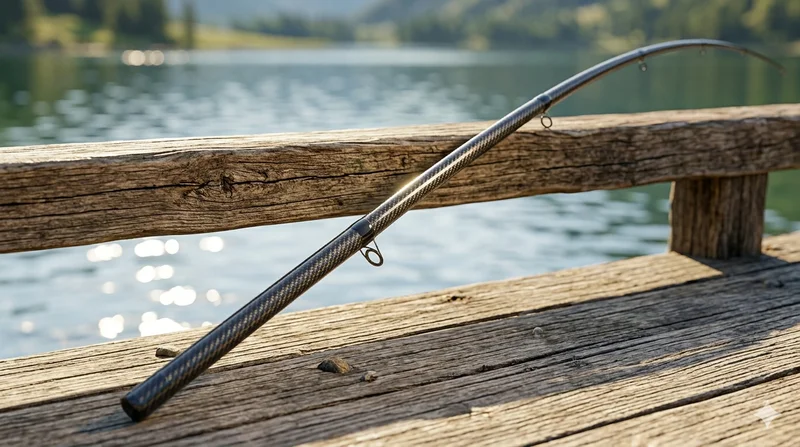
Carbon Fiber Fishing Rod Blank
High-quality carbon fiber fishing rod blank manufactured from multiple grades of Toray carbon fiber cloth. Available in a wide range of lengths, powers, and actions for freshwater and saltwater applications. Suitable for OEM rod building.
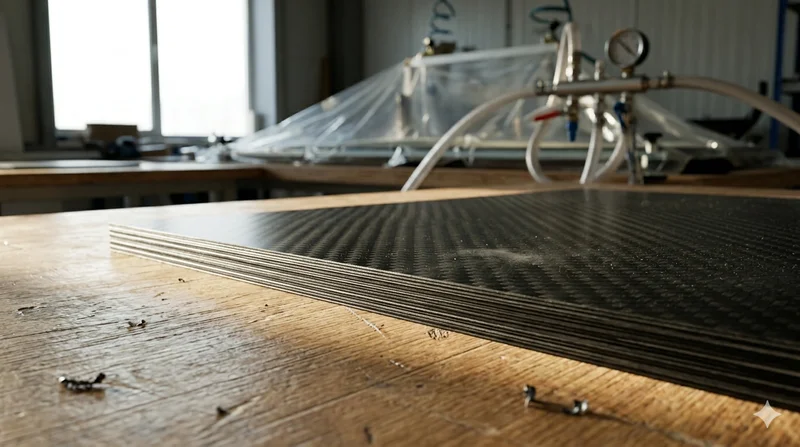
Carbon Fiber Plate — 3K Twill T700 3.0mm
Medium-thickness 3.0mm carbon fiber plate offering significantly higher load capacity while maintaining attractive 3K twill finish. Suitable for structural brackets, reinforcement plates, and load-bearing panels.
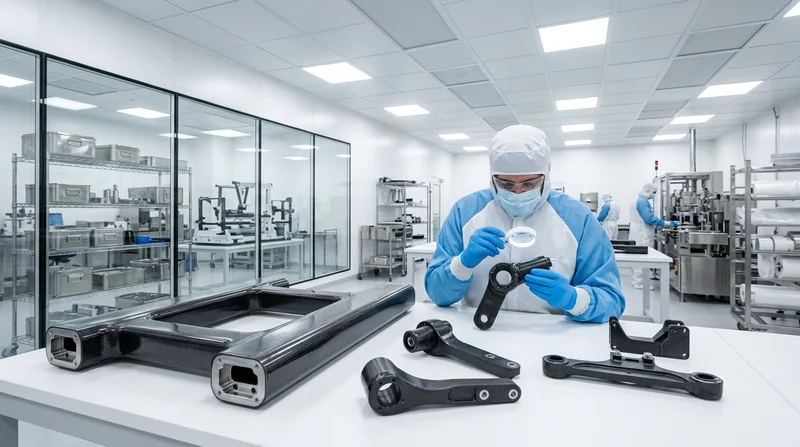
Custom Carbon Fiber Medical Device Components
Medical-grade carbon fiber components manufactured for imaging equipment, surgical instruments, and patient support systems. Carbon fiber's radiolucency (X-ray transparency) and high strength-to-weight ratio make it ideal for CT scanner beds, wheelchair frames, surgical robot arms, and MRI-compatible accessories. Biocompatible resin systems available.
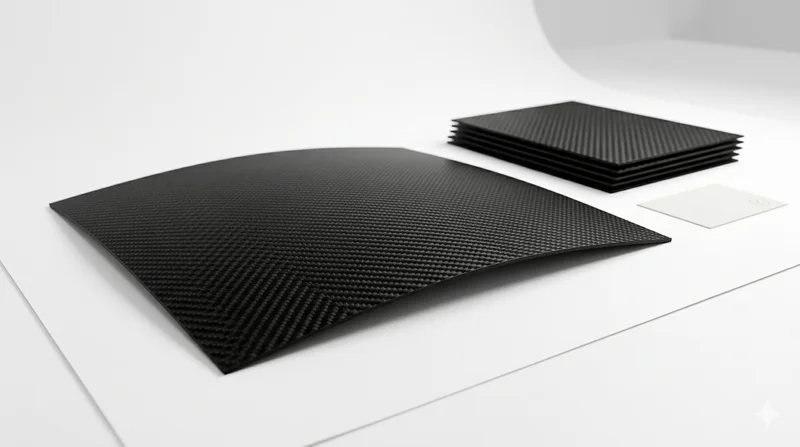
Carbon Fiber Plate — 3K Twill T700 1.5mm
Thin 1.5mm carbon fiber plate with 3K twill weave surface. Lightweight and stiff, commonly used for covers, panels, drone bodies, and applications requiring a premium aesthetic appearance.
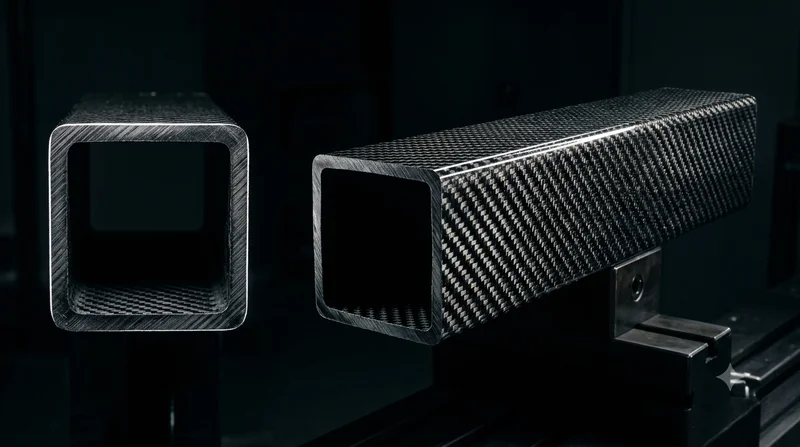
Square Carbon Fiber Tube — 3K Twill T700
Square cross-section carbon fiber tube manufactured with 3K twill weave for torsional strength. Preferred for structural frames, trusses, and support columns where rectangular geometry offers design flexibility.